Category: Filmmaking

  • The Role of a Film Director From Script to Final Cut

    The Role of a Film Director From Script to Final Cut

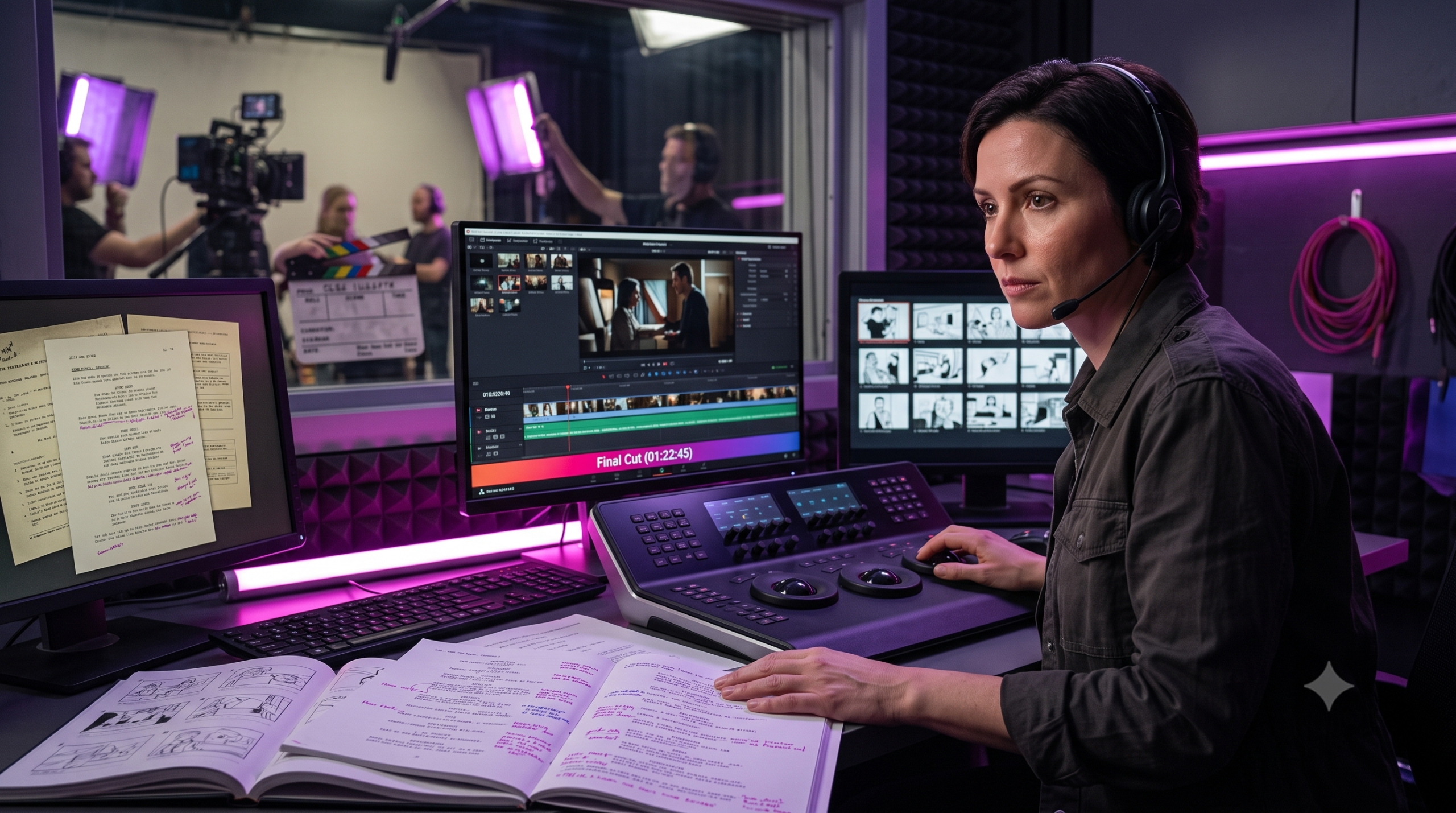
    If you think the director just yells “Action!”, you’re missing the 90% of work that happens before and after. From script rewrites to the last colour grade tweak, the role of a film director shapes every frame, performance, and emotion—often under brutal timelines and tight budgets.

    TL;DR

    • Directors drive every creative, technical, and emotional choice from script to final cut.
    • Modern workflows blend hands-on direction with AI tools for faster, cost-efficient production.
    • Key director tasks: script shaping, casting, shot design, actor direction, edit approvals, and final mastering.
    • AI-powered pipelines can cut post timelines by 40–60% without sacrificing director-led vision.

    Script Development: Where the Director’s Influence Begins

    Forget the old idea that the director just turns up on set. The real work often starts months earlier, in script meetings and storyboarding sessions. Directors collaborate with writers to shape not just dialogue, but pacing, tone, and visual subtext. On a typical feature, a director may request 3–7 rounds of script revisions before pre-production even begins.

    Tools like DeepMind’s Genie or OpenAI’s GPT-4o are already accelerating script iterations, but the director’s taste still defines every creative decision. AI can suggest, but it can’t choose the heartbeat of a scene.

    Pre-Production: Visualising and Planning Every Frame

    Pre-production is where the director’s vision becomes a concrete plan. This phase covers casting, location scouting, and the shot list. Directors work closely with the DoP (Director of Photography), production designers, and storyboard artists to nail down the film’s look and feel. For a 100-minute feature, this can involve 1,000+ storyboard frames and dozens of camera setups.

    AI-driven tools like Runway’s Gen-2 or Pika 1.0 now assist in pre-visualisation, enabling directors to test lighting, camera movement, or even audition digital backgrounds before a single set is built. This means fewer on-set surprises and up to 30% reduction in pre-production timelines according to McKinsey research.

    Casting and Working with Actors: Crafting Performance

    The chemistry between director and actor is the engine of every memorable performance. Directors handle auditions, callbacks, and chemistry reads, then spend weeks (or sometimes just days, on indie budgets) in rehearsal. On set, the director’s feedback shapes every gesture and inflection, balancing the script’s intent with spontaneous magic from the cast.

    Directors also set the emotional tone—think of Greta Gerwig’s meticulous rehearsal process for “Little Women” or S.S. Rajamouli’s hands-on approach on “RRR.” No AI tool replaces this human dynamic, though digital casting and virtual rehearsals are expanding options for international co-productions.

    Production: Orchestrating the Shoot

    When cameras roll, the director is everywhere—blocking actors, reviewing takes, collaborating with the cinematographer, and making split-second decisions under pressure. On a standard 30-day shoot, a director will call “cut” on hundreds of takes, always tracking continuity, tempo, and emotional arc.

    AI now assists with on-set playback, continuity tracking, and even live VFX previews. For instance, Adobe Sensei can flag lighting mismatches in real time. Still, the director’s real power is in uniting a 50+ person crew behind a single vision—no algorithm can do that.

    Post-Production: Shaping the Final Story

    Directors are deeply involved in the edit—selecting takes, shaping the rhythm, and working with editors, sound designers, and colourists. A typical post-production schedule for a feature film is 3–6 months, but AI-powered tools are compressing this to as little as 6–8 weeks for indie projects.

    Platforms like ElevenLabs (for voice correction and dubbing) and Runway Gen-2 (for background replacement) let directors iterate faster. But the director’s eye is still the final filter—AI can offer, but only a human can say “that’s the take.”

    For a detailed breakdown of each filmmaking phase, see our guide Pre-Production vs Production vs Post-Production: Understanding the Filmmaking Process.

    Director’s Decisions: Impact on Budget, Timeline, and Quality

    A director’s choices ripple across the entire production. Script rewrites can save weeks in post. Efficient shot planning trims location days and reduces overtime costs. In one Vidxen project, director-led AI workflows shaved ₹1.8 crore (approx. $215K) off the VFX budget while delivering Hollywood-level quality—proof that creative leadership and smart tech aren’t opposites.

    Director Task Impact AI/Tech Leverage
    Script Rewriting Reduces edits, clarifies vision GPT-4o, DeepMind Genie
    Shot Listing Optimises schedule, saves ₹₹₹ AI pre-vis, Runway Gen-2
    On-Set Direction Boosts crew efficiency Live AI continuity tools
    Post Supervision Faster, cheaper edit cycles Runway, ElevenLabs, Adobe Sensei

    For more on how cinematography and direction interplay, see How Cinematography Shapes the Visual Identity of a Film.

    Ready to Direct Your Vision from Script to Screen?

    Get blockbuster-quality sequences, AI-enhanced VFX, and end-to-end production support—without the Hollywood price tag. Our producers work directly with directors at every stage, from script to final cut.

    AI’s Place: Augmenting, Not Replacing, the Director

    AI can accelerate the process, but it can’t replace a director’s instincts or taste. Generative tools help visualise worlds and automate tedious post work, but the human eye still makes the final call. As OpenAI’s Sora shows, synthetic footage is getting photoreal—but it’s directors who turn pixels into stories audiences remember.

    Even the best AI pipeline needs a creative lead; otherwise, you end up with soulless content that nobody wants to watch. The future isn’t “AI vs. director”—it’s “director, now with superpowers.”

    From Final Cut to Release: The Director’s Last Word

    The director is usually the last person to sign off before a film goes to colour grading, mastering, and distribution. They approve the final cut, review the sound mix, and often oversee marketing trailers or festival submissions. For OTT or theatrical releases, directors work with platform QC teams to ensure the film meets technical specs—4K upscaling, surround sound, subtitle accuracy.

    End-to-end movie production services, like Vidxen’s Movie Production, now offer directors AI-powered tools for versioning, last-minute edits, and mastering—so you can focus on storytelling, not technical firefighting.

    For more on how showrunners and directors collaborate in series, see The Role of a Showrunner in Modern TV Series Production.

    The Role of a Film Director: Not Just “Action!”

    Summing up: the director is the creative nucleus of any film, orchestrating every phase from script tweaks to the final export. The job is part-artist, part-manager, and part-technologist. Today’s directors leverage AI to reduce costs and compress timelines, but their vision remains irreplaceable. If you want a film that moves audiences (and investors), invest in a director-led pipeline—technology is only as powerful as the hands guiding it.

    For a complete overview of modern AI-powered production, see our pillar post AI Video Production: The Complete Guide.

    FAQ — The Role of a Film Director in Modern Filmmaking

    What does a film director actually do on set?

    A film director orchestrates all creative and technical decisions on set. This includes directing actors, managing the crew, overseeing camera angles and lighting, and ensuring every shot aligns with the story and vision established during pre-production. The director is the final authority on performance, pacing, and visual style during the shoot.

    How early does a director get involved in a film project?

    Directors often join during the script development phase, months or even years before shooting begins. They influence story structure, character arcs, and visual tone from the outset, collaborating with writers and producers to shape the film’s foundation before pre-production starts.

    Can AI tools replace a director’s creative role?

    No—AI can speed up script writing, visualisation, and even post-production, but it cannot replicate a director’s creative judgement or emotional intuition. The director’s taste and leadership are still essential for achieving emotionally resonant, audience-ready films.

    How does a director impact production costs and timelines?

    Director-led planning—especially in script, shot listing, and post supervision—can reduce location days, overtime, and costly reshoots. When paired with modern AI workflows, directors can compress timelines by 40–60% and save substantial VFX and editing costs compared to traditional pipelines.

    What’s the director’s role in post-production?

    Directors review and approve each edit, select the best takes, guide sound and music choices, and supervise colour grading and VFX. The director ensures the final cut matches their vision before the film is mastered for distribution on OTT, theatrical, or festival platforms.

    How are AI tools changing the director’s workflow?

    AI tools now accelerate script iterations, automate pre-visualisation, assist with on-set continuity, and streamline editing and VFX. Directors can review more options, make faster decisions, and focus on creative leadership—without being bogged down by manual technical tasks.

    What’s the difference between a director and a showrunner?

    In film, the director is the creative lead. In TV, a showrunner oversees the entire series—managing scripts, episode directors, and continuity. Directors execute the vision on individual episodes, but the showrunner ensures overall narrative and stylistic coherence across the series.

    Where can I get end-to-end support for director-led movie production?

    Services like Vidxen’s Movie Production offer end-to-end support—from script and storyboarding to AI-powered VFX, editing, and mastering. Producers and directors collaborate throughout, ensuring the final film matches the creative vision while optimising cost and time.
  • How Cinematography Shapes the Visual Identity of a Film

    How Cinematography Shapes the Visual Identity of a Film

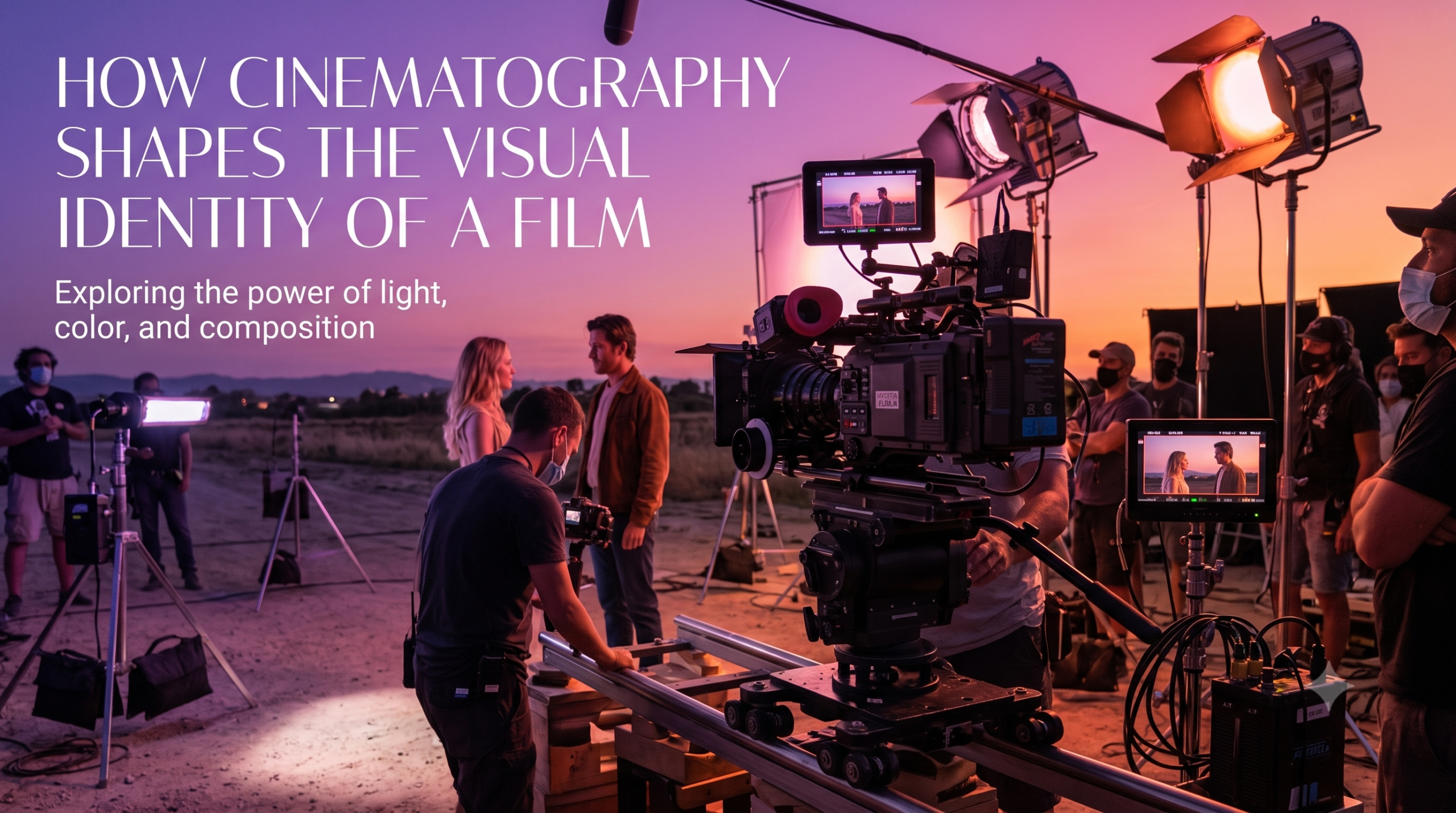
    A film’s visual identity isn’t built in the script—it’s crafted shot by shot, as cinematography choices turn words on a page into unforgettable images. From ₹25 lakh indie dramas to $100M blockbusters, every iconic look starts with how the camera sees the world.

    TL;DR

    • Cinematography is the foundation of a film’s visual identity—every shot, angle, and colour choice matters.
    • Lighting, camera movement, and lens selection define tone, mood, and brand recognition.
    • AI tools now accelerate visual development, making cinematic quality accessible at lower budgets.
    • Iconic films are instantly recognisable because of intentional visual design, not accidental style.

    What Is Cinematography—and Why Does It Matter?

    Cinematography is more than framing a shot; it’s the art and science of how a story is visually told. The director of photography (DP) chooses how to light, colour, and compose every frame, directly shaping the audience’s emotional response. Think of Blade Runner’s neon haze or In the Mood for Love’s saturated reds—these aren’t happy accidents, but deliberate decisions that define visual identity.

    According to the Academy’s archive on cinematographers, a film’s look is as recognisable as its lead actor. The choices made in pre-production lock in a movie’s signature style long before post-production VFX or colour grading. This is why studios invest heavily in DPs who can translate a director’s vision into a visual language that sticks in audience memory.

    Lighting: The Emotional Engine of Visual Identity

    Lighting is the fastest way to set mood—and often the biggest clue to a film’s identity. High-key lighting (think The Grand Budapest Hotel) signals whimsy and accessibility, while low-key lighting (Se7en, Sicario) builds tension and unease. Even on a tight budget, strategic lighting choices distinguish a film from the generic “digital flatness” that plagues lower-end productions.

    Modern productions increasingly rely on AI-assisted lighting pre-visualisation tools. For instance, Runway Gen-2 enables DPs to simulate different lighting setups before any gear is rented, slashing pre-production costs and timeline by up to 50%. This is not just a tech gimmick—it’s a practical lever for creating a unique visual feel, even in an AI pipeline.

    Camera Movement and Framing: Directing the Viewer’s Eye

    How a camera moves—or stays still—tells the audience how to feel about what’s on screen. Steadicam shots (see 1917) immerse viewers, while locked-down frames (à la Moonrise Kingdom) create a sense of control or quirkiness. The framing of close-ups versus wide shots isn’t arbitrary: it’s foundational to the film’s personality.

    AI-powered storyboarding tools now let directors and DPs block out complex camera moves virtually. Google DeepMind’s Veo can previsualise scenes with dozens of camera and lens combinations, giving filmmakers more control over visual identity before shooting a single frame. This translates to fewer reshoots, faster approvals, and a tighter budget.

    Colour Palette and Grading: The DNA of Film Branding

    Colour isn’t just aesthetic—it’s a signature. Amélie is remembered for its green and red hues; Mad Max: Fury Road for its orange and teal. Colour palette decisions in cinematography are often made in tandem with production design, but it’s the DP who ensures consistency through grading and on-set choices.

    With the rise of AI-driven colour grading (such as Adobe’s Firefly and Sensei), even indie productions can test and lock in a visual style early. AI tools analyse reference films and apply complex LUTs (look-up tables) instantly, saving days in post and making high-end looks affordable—often for less than ₹1 lakh per project.

    Lens Choices, Aspect Ratio, and Texture: Subtle Levers, Big Impact

    Wide-angle lenses exaggerate space and drama (Dune), while telephoto lenses flatten perspective for intimacy (Her). Aspect ratio—2.39:1 widescreen versus 4:3 retro—signals period, genre, or intent. Grain, softness, and digital sharpness are all part of a film’s texture, and they’re chosen, not left to chance.

    Recent advances in generative AI, such as OpenAI’s Sora, allow filmmakers to simulate lens and texture choices virtually, testing how different “looks” impact story and emotion. This is a radical shift: you can now preview the entire visual identity in pre-production, not just guess and fix in post.

    AI and the Democratisation of Cinematic Visual Identity

    Until recently, distinctive visual identity required big budgets and access to top-tier talent. AI pipelines now level the playing field. Tools like Pika and Runway let indie filmmakers and studios experiment with lighting, composition, and VFX before the first day of shooting.

    For example, a ₹30 lakh feature can now achieve “big studio” looks that would have cost ₹2 crore in 2018. AI-enhanced VFX, generative backgrounds, and real-time previsualisation mean even small teams can create a recognisable visual brand. The outcome: films stand out on OTT platforms, not because of budget, but because of intentional visual design.

    For a comprehensive breakdown of AI’s impact on production economics and creative workflows, explore our AI Video Production Complete Guide.

    Case Studies: Iconic Visual Identities Built by Cinematography

    Consider The Revenant: DP Emmanuel Lubezki’s natural light approach gave the film its raw, immersive identity. Or Roma, where Alfonso Cuarón’s monochrome palette and wide compositions evoke nostalgia and intimacy. These choices weren’t just technical—they were strategic, aligning every frame with the film’s emotional core.

    Film Cinematographic Identity Key Techniques
    Blade Runner 2049 Neon-drenched, futuristic noir Layered lighting, haze, cyan/orange palette
    Moonlight Dreamlike, intimate Handheld camera, rich blues, shallow focus
    Mad Max: Fury Road Hyperreal, kinetic High-contrast, centre framing, bold colour grading
    Roma Timeless, poetic Monochrome, wide shots, natural light

    What unites these films isn’t budget—it’s the clarity of their cinematographic vision. Each is instantly recognisable, whether in a festival lineup or a Netflix thumbnail.

    For more on how long-form projects build and sustain a visual signature, see How TV Serial Writers Develop Long-Running Storylines.

    Bring Your Features to Life with AI-Enhanced Cinema

    Ready to define a visual identity that stands out—without burning through your budget? Our AI-powered movie production workflow delivers cinematic quality, Hollywood-level VFX, and 4K upscaling for feature films, documentaries, and more. End-to-end production, cost-efficient and fast.

    Building Visual Identity in the AI Era: Workflow and Costs

    In 2024, you don’t need a ₹10 crore budget to achieve a distinctive visual signature. Here’s a quick workflow comparison:

    Stage Traditional Pipeline AI-Enhanced Pipeline
    Previsualisation Manual sketches, physical tests (2–4 weeks) AI-based storyboarding, virtual lighting (2–5 days)
    On-set Cinematography Large crew, heavy gear Lean crew, real-time look simulation
    VFX/Colour Grading Manual rotoscoping, LUTs (₹10–50 lakh) AI upscaling, auto-grading, generative backgrounds (₹2–10 lakh)
    Final Master 3–6 months 1–2 months

    This isn’t theoretical—industry estimates suggest AI-enhanced workflows cut VFX and grading costs by 60–80%, as seen in case studies covered by The Hollywood Reporter. The upshot: more of your budget goes to creative direction, not manual technical labour.

    For a step-by-step breakdown of the full filmmaking pipeline, including pre-production and post, check out Pre-Production vs Production vs Post-Production: Understanding the Filmmaking Process.

    How to Brief Your Cinematographer for Maximum Visual Impact

    Most visual identity failures start with a vague brief. If you want your film to stand out, get specific:

    • Reference 2–3 films for look and mood (e.g. “Blade Runner meets The Lunchbox”)
    • Specify emotional arc by act (e.g. warm tones in Act 1, desaturated in climax)
    • Discuss camera movement philosophy: fluid, locked-off, handheld?
    • Agree on signature motifs (e.g. recurring close-ups, silhouette shots, colour pops)
    • Lock in a workflow for previsualisation—AI tools or traditional?

    AI pipelines make rapid prototyping possible. You can now iterate on look and feel in days, not weeks, leading to a tighter, more intentional visual identity throughout production.

    For more on leveraging AI for social video, see How Businesses Use AI for Social Media Video Production.

    To see how our service delivers cinematic quality for films of any scale, visit Movie Production.

    FAQ — Cinematography & Film Visual Identity

    How does cinematography differ from direction?

    The director shapes the overall story and performance, while the cinematographer (DP) determines how that story is visually realised—lighting, framing, camera movement, and colour. Direction sets intent; cinematography delivers the visual experience. Both roles collaborate to define a film’s identity, but the DP’s choices anchor the look and feel.

    Can AI really match the “look” of big-budget films?

    AI can now replicate many elements—lighting, grading, VFX—at a fraction of traditional cost. Tools like OpenAI’s Sora and Adobe’s Sensei allow indie projects to achieve cinematic quality, though creative vision and direction remain essential. AI enhances, but does not replace, the human eye for visual storytelling.

    What’s the most important element for visual identity?

    Consistency. Whether it’s a unique colour palette, signature camera movement, or recurring compositional motif, the key is that every shot reinforces the film’s emotional and narrative goals. Visual identity is built through repetition and clarity, not expensive gear or effects alone.

    How do I brief a cinematographer on a tight budget?

    Be specific about mood, references, and any “must-have” shots or looks. Use AI tools to create visual references and test palettes before shooting. Prioritise the elements that will be most visible to your audience—lighting, composition, and colour—rather than chasing costly equipment.

    Are there risks in relying heavily on AI for visual identity?

    The main risk is generic output—AI can automate, but it can’t invent your film’s personality. You still need a clear creative direction and human oversight to ensure the final look isn’t just technically polished, but emotionally resonant and unique to your story.

    How fast can an AI-driven pipeline deliver a finished film?

    AI-enhanced workflows routinely cut production and post timelines by 2–4×. For example, a feature that would take 6 months traditionally can now be finished in 2–3 months, depending on complexity and revisions. The biggest time savings come in VFX, colour, and previsualisation stages.

    What’s the cost difference between traditional and AI-enhanced production?

    Industry cases show AI pipelines can save 60–80% on VFX, grading, and previsualisation. A sequence costing ₹2 crore in 2018 might now be delivered at ₹30–50 lakh. The savings scale with project complexity, making high-end visuals accessible for indie and mid-budget filmmakers.

    Where can I learn more about the full filmmaking process?

    For a detailed roadmap from script to screen, see our guide on Pre-Production vs Production vs Post-Production: Understanding the Filmmaking Process. It covers every major stage, including where cinematography fits and how visual identity is preserved throughout.

  • Pre-Production vs Production vs Post-Production: Understanding the Filmmaking Process

    Pre-Production vs Production vs Post-Production: Understanding the Filmmaking Process

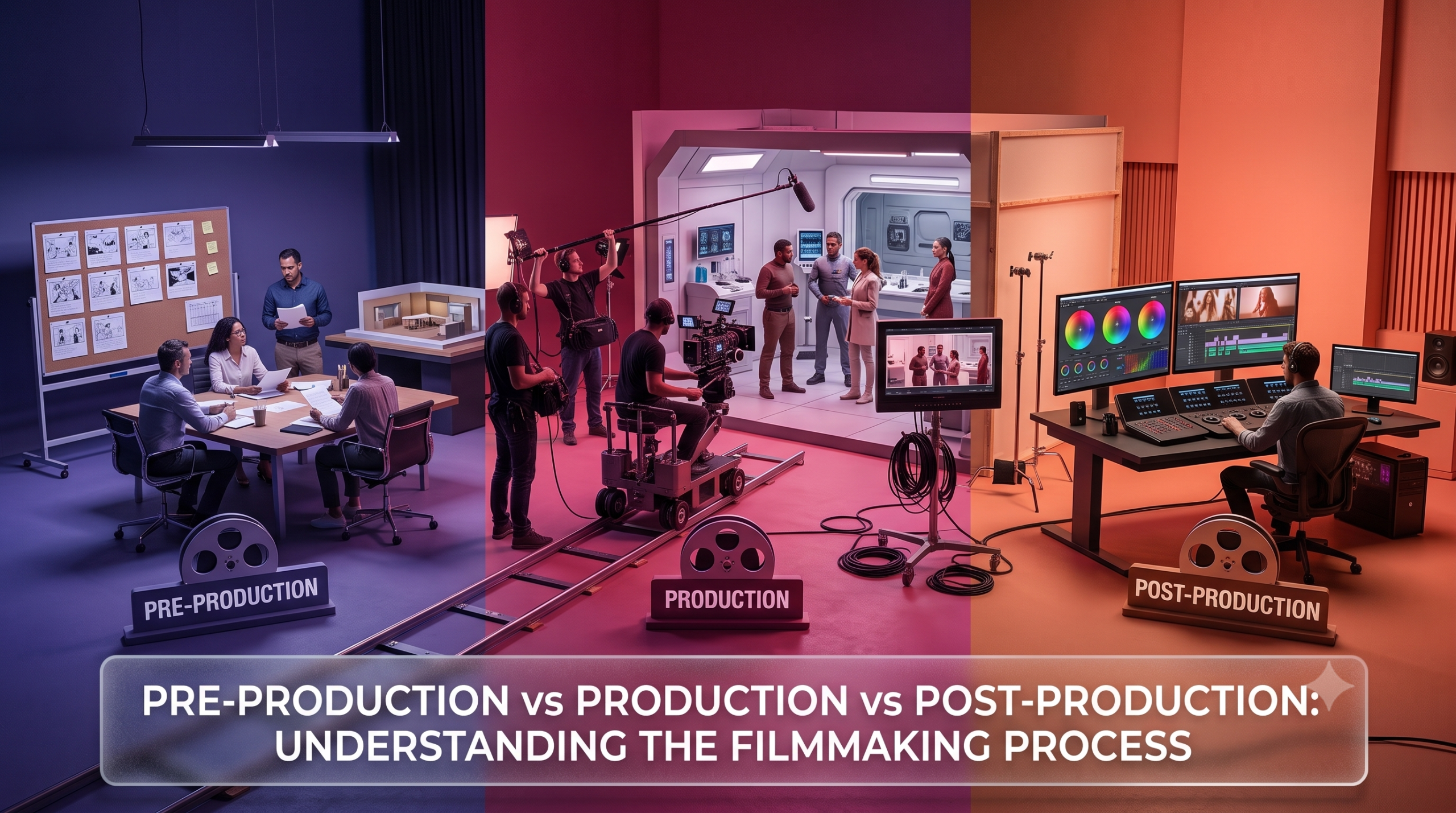
    Most indie filmmakers still spend 40% of their budget on mistakes made before the first camera rolls—because they misunderstand the real impact of pre-production, production, and post-production stages in filmmaking.

    TL;DR

    • Pre-production is make-or-break—over 60% of project delays stem from poor planning at this stage.
    • Production is where costs spike fastest; streamlined AI tools now cut shoot days and on-set crew needs by 25–40%.
    • Post-production eats the most time, but AI-powered workflows deliver Hollywood-level VFX, colour, and audio at a fraction of legacy costs.
    • Every filmmaking stage is interdependent—neglecting one inflates costs and risks at the next.
    • See real-world numbers, tech, and workflow upgrades below.

    Why Filmmaking Production Stages Matter More Than You Think

    Most budgets and timelines explode because the line between pre-production, production, and post-production is blurred—or misunderstood entirely. Netflix’s originals pipeline is engineered to avoid this: they invest aggressively in script, storyboard, and test shoots, knowing that every rupee spent here saves ten in post. For most independent filmmakers, skipping or rushing early steps leads directly to reshoots, VFX patchwork, and blown delivery dates.

    Stage 1: Pre-Production—Blueprints, Budgets, and Avoiding Disaster

    Pre-production isn’t paperwork—it’s where 80% of your project’s fate is sealed. Tasks include script finalisation, storyboarding, casting, location scouting, budgeting, scheduling, and legal clearances. AI tools now generate draft scripts, animatics, and even pre-visualisations in days, not weeks. For example, Runway Gen-3 can output shot references and mood boards from a text prompt, letting directors iterate faster and cheaper than ever.

    Traditional Pre-Production AI-Enhanced Pre-Production
    Scriptwriting: 3–8 weeks
    Storyboarding: ₹1–3 lakh
    Location Scouting: 2–4 weeks
    Animatics: ₹50,000+
    Script drafts: 2–5 days
    AI storyboards: ₹10–30k
    Virtual locations: 1–2 days
    AI animatics: ₹8–12k

    Vast cost differences emerge here. A 10-minute AI-generated animatic may cost ₹10,000 and be ready in 48 hours, compared to ₹50,000 and a fortnight for traditional hand-drawn boards. The best directors obsess over pre-production because it’s the cheapest place to fix mistakes.

    For a deep dive into how AI is overhauling early-stage workflows, see our AI Video Production Complete Guide.

    Stage 2: Production—Where the Clock (and Costs) Race

    Production is the “lights, camera, action” phase, but it’s also where budgets bleed. Crew, cast, gear, sets, and locations cost between ₹1 lakh and ₹10 lakh per day for even modest shoots. Every hour lost to unclear plans or script changes compounds these expenses. According to The Hollywood Reporter, average shoot costs have risen 12% since 2019, largely due to inefficiency and COVID-era overruns.

    AI tools now automate script breakdowns, call sheets, shot lists, and even real-time lighting simulations. Virtual production—pioneered by Industrial Light & Magic—lets you shoot actors in front of LED walls with generative backgrounds, slicing location costs and post-VFX time. On a ₹20 crore feature, that’s often a ₹2–4 crore saving.

    Workflow Traditional AI/Virtual Pipeline
    Shoot Days 30–60 18–35
    On-set Crew 80–200 45–120
    Location Costs ₹10–30 lakh ₹3–8 lakh

    With AI-powered planning, producers cut up to 40% of on-set hours by eliminating “dead time” between setups. That means more scenes in the can, less overtime, and fewer blown budgets.

    Stage 3: Post-Production—From Raw Footage to Cinematic Masterpiece

    This is where most projects stall. Editing, VFX, colour grading, sound design, and mastering can drag on for months—especially if earlier stages left loose ends. Traditional post houses charge $100–$500 per VFX shot, and a single complex composite can take days. AI changes the equation: tools like Adobe Sensei and ElevenLabs automate rotoscoping, upscaling, audio clean-up, and multi-language dubbing at 1/10th of legacy costs.

    Vidxen’s AI pipeline recently upscaled 1950s archival film to pristine 4K and delivered 120+ VFX shots for a feature in 18 days—what used to take 2–3 months. The result: Hollywood-level finish, OTT-ready files, and a client VFX bill slashed by $2.5M.

    For more on how AI is transforming post workflows, see How AI Is Revolutionizing TV Serials & Series.

    How the Three Stages Interlock (and Where Most Projects Break)

    Each filmmaking production stage is a domino: errors in pre-production cascade into expensive fixes in production, and unresolved production issues balloon post costs. Industry data from McKinsey shows that 70% of cost overruns trace back to missed early-stage details. The best producers obsess over handoffs—ensuring scripts are locked, assets are prepped, and the team is aligned before moving forward.

    Modern AI pipelines make these handoffs seamless: storyboards feed directly into shot lists; virtual sets flow into post-production composites. But don’t believe the AI hype—human creative direction is still what turns raw assets into compelling cinema. AI is the multiplier, not the replacement.

    AI’s Role: Cost, Speed, and Creative Control

    AI isn’t just about automating grunt work. It’s about unlocking new creative options—like generating photorealistic backgrounds, instant language dubbing, or reconstructing lost footage. Google DeepMind’s Veo and OpenAI’s Sora now generate entire scenes from text prompts, and while these tools won’t replace your director, they do let you test wild ideas before spending on a full crew.

    For independent filmmakers, this means cinematic quality at 1/5th the usual budget, and turnarounds measured in days, not months. The days of $10,000-a-minute VFX are numbered. The real question: are you using every tool available to control your costs and timelines?

    Ready for a Smarter Movie Production Pipeline?

    Brief us your project and see how AI-enhanced workflows deliver blockbuster visuals, faster timelines, and cost savings you can measure. No guesswork—just cinematic results, end-to-end.

    Case Study: Real Numbers from Modern Pipelines

    Let’s put numbers to the theory. In 2023, a mid-budget Hindi feature used Vidxen’s AI pipeline for pre-production and post. Result: shoot days cut from 48 to 29, VFX costs down by 70%, and delivery to OTT in 11 weeks (vs 22 weeks using legacy methods). The client’s VFX budget was slashed by $2.5M, and the final product streamed in 4K on major platforms.

    Metric Traditional With AI
    Pre-Production Time 6–8 weeks 2–3 weeks
    Shoot Days 45–60 25–35
    Post-Production 12–16 weeks 4–6 weeks
    VFX Budget $3.5M $1M
    OTT Delivery Standard HD Pristine 4K

    These numbers aren’t hype—they’re the new baseline for smart producers. The lesson: every stage matters, and the right tech stack multiplies your budget’s impact.

    For more examples of high-efficiency video production, see Cost Comparison: AI vs Manual TV Series Production.

    Key Takeaways for Filmmakers and Studios

    • Pre-production is the cheapest stage to fix problems—don’t skimp, and leverage AI tools for storyboarding and planning.
    • Production costs compound rapidly; every day saved is ₹1–3 lakh back in your pocket.
    • Post-production is where cinematic polish happens. AI VFX, upscaling, and automated dubbing now deliver Hollywood-level results on indie budgets.
    • Each stage is a multiplier for the next—weakness in one inflates costs and risk downstream.
    • AI is an amplifier, not a replacement for creative direction. Use it to control costs, not as a shortcut for vision.

    For an end-to-end, AI-enhanced movie production experience, explore our Movie Production service—designed for creators who want cinematic results without legacy studio bloat.

    If you’re interested in the storytelling side of marketing films, read How Brand Storytelling Makes Marketing Videos More Memorable.

    FAQ — Filmmaking Production Stages Explained

    What exactly happens during pre-production?

    Pre-production covers all planning before cameras roll: scriptwriting, storyboarding, budgeting, casting, scouting, scheduling, and legal paperwork. With AI tools, script drafts, animatics, and virtual location scouting are now completed in days, not weeks. This stage is the cheapest time to fix creative or logistical problems.

    How does AI change the production phase?

    AI automates call sheets, shot lists, lighting plans, and even generates virtual sets. This reduces shoot days and crew size, saving 25–40% on direct costs. Virtual production (like LED wall backdrops) also slashes location expenses and enables real-time creative adjustments on set.

    Is post-production still the most time-consuming stage?

    Traditionally, yes—editing, VFX, colour, and sound design can take months. AI-powered workflows now automate rotoscoping, upscaling, and even audio mixing, reducing post timelines by 2–4×. Final mastering, revisions, and quality checks are still crucial, but the overall cycle is much faster.

    Can I really achieve Hollywood-level quality on an indie budget?

    Yes, if you use AI-enhanced pipelines. Generative VFX, automated colour grading, and neural upscaling let indie films hit 4K OTT standards for a fraction of legacy costs. The key is combining these tools with solid creative direction and a disciplined workflow across all stages.

    Where do most film projects go over budget?

    Most overruns come from poor pre-production: unclear scripts, missed logistics, or underestimating post needs. Each mistake multiplies downstream—reshoots, extra VFX, and longer edits all pile on costs. Meticulous early planning and clear handoffs between stages prevent this.

    Do AI tools replace the need for human directors or editors?

    No. AI is an accelerator and amplifier, but creative decisions, narrative structure, and final quality still depend on experienced directors and editors. The smartest pipelines pair AI automation with human oversight to ensure the film’s vision stays intact.

    How do I choose the right AI tools for my film?

    Start by mapping your pain points—slow storyboarding, expensive VFX, or dubbing needs. Then look for AI solutions proven in those areas (e.g., Runway for VFX, ElevenLabs for dubbing, Adobe Sensei for editing). Test on a pilot scene before scaling up to the full production.

    Where can I get end-to-end AI-powered movie production?

    Services like Vidxen’s Movie Production offer complete AI-enhanced workflows—from script and storyboard to final master, including VFX, upscaling, and OTT-ready delivery. This lets you focus on creative vision while controlling costs and timelines.