
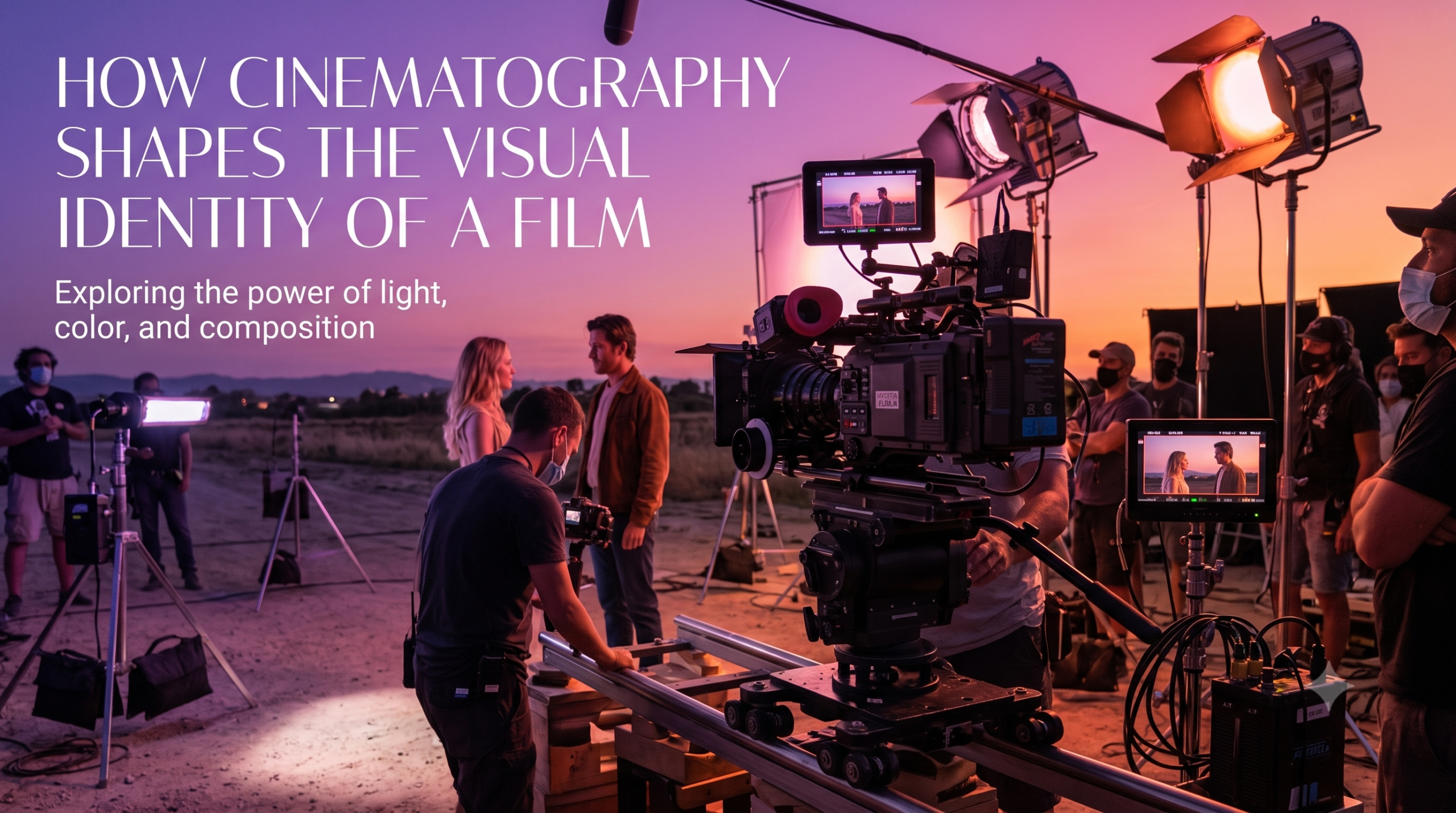
A film’s visual identity isn’t built in the script—it’s crafted shot by shot, as cinematography choices turn words on a page into unforgettable images. From ₹25 lakh indie dramas to $100M blockbusters, every iconic look starts with how the camera sees the world.
TL;DR
- Cinematography is the foundation of a film’s visual identity—every shot, angle, and colour choice matters.
- Lighting, camera movement, and lens selection define tone, mood, and brand recognition.
- AI tools now accelerate visual development, making cinematic quality accessible at lower budgets.
- Iconic films are instantly recognisable because of intentional visual design, not accidental style.
What Is Cinematography—and Why Does It Matter?
Cinematography is more than framing a shot; it’s the art and science of how a story is visually told. The director of photography (DP) chooses how to light, colour, and compose every frame, directly shaping the audience’s emotional response. Think of Blade Runner’s neon haze or In the Mood for Love’s saturated reds—these aren’t happy accidents, but deliberate decisions that define visual identity.
According to the Academy’s archive on cinematographers, a film’s look is as recognisable as its lead actor. The choices made in pre-production lock in a movie’s signature style long before post-production VFX or colour grading. This is why studios invest heavily in DPs who can translate a director’s vision into a visual language that sticks in audience memory.
Lighting: The Emotional Engine of Visual Identity
Lighting is the fastest way to set mood—and often the biggest clue to a film’s identity. High-key lighting (think The Grand Budapest Hotel) signals whimsy and accessibility, while low-key lighting (Se7en, Sicario) builds tension and unease. Even on a tight budget, strategic lighting choices distinguish a film from the generic “digital flatness” that plagues lower-end productions.
Modern productions increasingly rely on AI-assisted lighting pre-visualisation tools. For instance, Runway Gen-2 enables DPs to simulate different lighting setups before any gear is rented, slashing pre-production costs and timeline by up to 50%. This is not just a tech gimmick—it’s a practical lever for creating a unique visual feel, even in an AI pipeline.
Camera Movement and Framing: Directing the Viewer’s Eye
How a camera moves—or stays still—tells the audience how to feel about what’s on screen. Steadicam shots (see 1917) immerse viewers, while locked-down frames (à la Moonrise Kingdom) create a sense of control or quirkiness. The framing of close-ups versus wide shots isn’t arbitrary: it’s foundational to the film’s personality.
AI-powered storyboarding tools now let directors and DPs block out complex camera moves virtually. Google DeepMind’s Veo can previsualise scenes with dozens of camera and lens combinations, giving filmmakers more control over visual identity before shooting a single frame. This translates to fewer reshoots, faster approvals, and a tighter budget.
Colour Palette and Grading: The DNA of Film Branding
Colour isn’t just aesthetic—it’s a signature. Amélie is remembered for its green and red hues; Mad Max: Fury Road for its orange and teal. Colour palette decisions in cinematography are often made in tandem with production design, but it’s the DP who ensures consistency through grading and on-set choices.
With the rise of AI-driven colour grading (such as Adobe’s Firefly and Sensei), even indie productions can test and lock in a visual style early. AI tools analyse reference films and apply complex LUTs (look-up tables) instantly, saving days in post and making high-end looks affordable—often for less than ₹1 lakh per project.
Lens Choices, Aspect Ratio, and Texture: Subtle Levers, Big Impact
Wide-angle lenses exaggerate space and drama (Dune), while telephoto lenses flatten perspective for intimacy (Her). Aspect ratio—2.39:1 widescreen versus 4:3 retro—signals period, genre, or intent. Grain, softness, and digital sharpness are all part of a film’s texture, and they’re chosen, not left to chance.
Recent advances in generative AI, such as OpenAI’s Sora, allow filmmakers to simulate lens and texture choices virtually, testing how different “looks” impact story and emotion. This is a radical shift: you can now preview the entire visual identity in pre-production, not just guess and fix in post.
AI and the Democratisation of Cinematic Visual Identity
Until recently, distinctive visual identity required big budgets and access to top-tier talent. AI pipelines now level the playing field. Tools like Pika and Runway let indie filmmakers and studios experiment with lighting, composition, and VFX before the first day of shooting.
For example, a ₹30 lakh feature can now achieve “big studio” looks that would have cost ₹2 crore in 2018. AI-enhanced VFX, generative backgrounds, and real-time previsualisation mean even small teams can create a recognisable visual brand. The outcome: films stand out on OTT platforms, not because of budget, but because of intentional visual design.
For a comprehensive breakdown of AI’s impact on production economics and creative workflows, explore our AI Video Production Complete Guide.
Case Studies: Iconic Visual Identities Built by Cinematography
Consider The Revenant: DP Emmanuel Lubezki’s natural light approach gave the film its raw, immersive identity. Or Roma, where Alfonso Cuarón’s monochrome palette and wide compositions evoke nostalgia and intimacy. These choices weren’t just technical—they were strategic, aligning every frame with the film’s emotional core.
| Film | Cinematographic Identity | Key Techniques |
|---|---|---|
| Blade Runner 2049 | Neon-drenched, futuristic noir | Layered lighting, haze, cyan/orange palette |
| Moonlight | Dreamlike, intimate | Handheld camera, rich blues, shallow focus |
| Mad Max: Fury Road | Hyperreal, kinetic | High-contrast, centre framing, bold colour grading |
| Roma | Timeless, poetic | Monochrome, wide shots, natural light |
What unites these films isn’t budget—it’s the clarity of their cinematographic vision. Each is instantly recognisable, whether in a festival lineup or a Netflix thumbnail.
For more on how long-form projects build and sustain a visual signature, see How TV Serial Writers Develop Long-Running Storylines.
Bring Your Features to Life with AI-Enhanced Cinema
Ready to define a visual identity that stands out—without burning through your budget? Our AI-powered movie production workflow delivers cinematic quality, Hollywood-level VFX, and 4K upscaling for feature films, documentaries, and more. End-to-end production, cost-efficient and fast.
Building Visual Identity in the AI Era: Workflow and Costs
In 2024, you don’t need a ₹10 crore budget to achieve a distinctive visual signature. Here’s a quick workflow comparison:
| Stage | Traditional Pipeline | AI-Enhanced Pipeline |
|---|---|---|
| Previsualisation | Manual sketches, physical tests (2–4 weeks) | AI-based storyboarding, virtual lighting (2–5 days) |
| On-set Cinematography | Large crew, heavy gear | Lean crew, real-time look simulation |
| VFX/Colour Grading | Manual rotoscoping, LUTs (₹10–50 lakh) | AI upscaling, auto-grading, generative backgrounds (₹2–10 lakh) |
| Final Master | 3–6 months | 1–2 months |
This isn’t theoretical—industry estimates suggest AI-enhanced workflows cut VFX and grading costs by 60–80%, as seen in case studies covered by The Hollywood Reporter. The upshot: more of your budget goes to creative direction, not manual technical labour.
For a step-by-step breakdown of the full filmmaking pipeline, including pre-production and post, check out Pre-Production vs Production vs Post-Production: Understanding the Filmmaking Process.
How to Brief Your Cinematographer for Maximum Visual Impact
Most visual identity failures start with a vague brief. If you want your film to stand out, get specific:
- Reference 2–3 films for look and mood (e.g. “Blade Runner meets The Lunchbox”)
- Specify emotional arc by act (e.g. warm tones in Act 1, desaturated in climax)
- Discuss camera movement philosophy: fluid, locked-off, handheld?
- Agree on signature motifs (e.g. recurring close-ups, silhouette shots, colour pops)
- Lock in a workflow for previsualisation—AI tools or traditional?
AI pipelines make rapid prototyping possible. You can now iterate on look and feel in days, not weeks, leading to a tighter, more intentional visual identity throughout production.
For more on leveraging AI for social video, see How Businesses Use AI for Social Media Video Production.
To see how our service delivers cinematic quality for films of any scale, visit Movie Production.
FAQ — Cinematography & Film Visual Identity
How does cinematography differ from direction?
The director shapes the overall story and performance, while the cinematographer (DP) determines how that story is visually realised—lighting, framing, camera movement, and colour. Direction sets intent; cinematography delivers the visual experience. Both roles collaborate to define a film’s identity, but the DP’s choices anchor the look and feel.
Can AI really match the “look” of big-budget films?
AI can now replicate many elements—lighting, grading, VFX—at a fraction of traditional cost. Tools like OpenAI’s Sora and Adobe’s Sensei allow indie projects to achieve cinematic quality, though creative vision and direction remain essential. AI enhances, but does not replace, the human eye for visual storytelling.
What’s the most important element for visual identity?
Consistency. Whether it’s a unique colour palette, signature camera movement, or recurring compositional motif, the key is that every shot reinforces the film’s emotional and narrative goals. Visual identity is built through repetition and clarity, not expensive gear or effects alone.
How do I brief a cinematographer on a tight budget?
Be specific about mood, references, and any “must-have” shots or looks. Use AI tools to create visual references and test palettes before shooting. Prioritise the elements that will be most visible to your audience—lighting, composition, and colour—rather than chasing costly equipment.
Are there risks in relying heavily on AI for visual identity?
The main risk is generic output—AI can automate, but it can’t invent your film’s personality. You still need a clear creative direction and human oversight to ensure the final look isn’t just technically polished, but emotionally resonant and unique to your story.
How fast can an AI-driven pipeline deliver a finished film?
AI-enhanced workflows routinely cut production and post timelines by 2–4×. For example, a feature that would take 6 months traditionally can now be finished in 2–3 months, depending on complexity and revisions. The biggest time savings come in VFX, colour, and previsualisation stages.
What’s the cost difference between traditional and AI-enhanced production?
Industry cases show AI pipelines can save 60–80% on VFX, grading, and previsualisation. A sequence costing ₹2 crore in 2018 might now be delivered at ₹30–50 lakh. The savings scale with project complexity, making high-end visuals accessible for indie and mid-budget filmmakers.
Where can I learn more about the full filmmaking process?
For a detailed roadmap from script to screen, see our guide on Pre-Production vs Production vs Post-Production: Understanding the Filmmaking Process. It covers every major stage, including where cinematography fits and how visual identity is preserved throughout.