
If your 9:16 Reel lands 3x more views than your old 16:9 promo, it’s not a fluke—it’s the algorithm rewarding format-native video. In 2024, mastering social video specs is the difference between 800 views and 80,000.
TL;DR
- Vertical (9:16) dominates Instagram Reels, TikTok, and YouTube Shorts—landscape is dead for social-first reach.
- Platform algorithms prioritise native formats, fast-paced edits, and optimised file sizes.
- Wrong aspect ratios or oversized files can throttle your reach by 50% or more.
- AI tools now automate cropping, resizing, and even trending audio sync for each channel.
- Mastering specs is non-negotiable for viral campaigns and consistent brand presence.
Why Video Format Makes or Breaks Social Reach
Upload a landscape video to Instagram Reels and watch it tank: black bars, awkward cropping, and the algorithm buries it. Social platforms are built for mobile—vertical (9:16) is no longer optional. According to Statista, over 97% of social video is consumed on mobile, and platforms like TikTok and YouTube Shorts explicitly downrank non-native formats. The right aspect ratio and duration are now as important as your creative itself.
Platform-by-Platform: The Specs You Can’t Ignore
Each social channel has a “sweet spot” for maximum engagement. Here’s a breakdown of the absolute minimum you should know before uploading:
| Platform | Recommended Format | Aspect Ratio | Duration | Max File Size |
|---|---|---|---|---|
| Instagram Reels | MP4, MOV | 9:16 | 15–90 sec | 250 MB |
| TikTok | MP4, MOV | 9:16 | 1–60 sec (up to 10 min for select users) | 287.6 MB (mobile) |
| YouTube Shorts | MP4 | 9:16 | 1–60 sec | 2 GB |
| Facebook Stories | MP4, MOV | 9:16 | 1–20 sec | 4 GB |
| LinkedIn Feed | MP4 | 1:1, 4:5, 9:16 | 3 sec–10 min | 5 GB |
For more granular specifications, consult the YouTube Help docs and Instagram’s official Reels guide. Don’t trust hearsay—in 2024, platforms update specs quarterly.
Vertical Video: The Only Format That Matters (for Now)
Vertical (9:16) isn’t just a fad. TikTok, Instagram Reels, and YouTube Shorts have all aligned on this aspect ratio because it fills the mobile screen and keeps thumbs scrolling. HubSpot’s latest research confirms vertical video yields up to 35% higher engagement rates than square or landscape. Even LinkedIn now supports vertical for mobile-first campaigns.
Why? Full-screen real estate equals less distraction, more immersion, and a direct line to your audience’s attention span—especially Gen-Z, who swipe past letterboxed content instantly. If you’re still shooting horizontal, you’re fighting the feed.
Beyond Aspect Ratio: Compression, Captions, and File Size
Uploading a 4K ProRes file to TikTok? Expect a 10-minute wait and a pixelated result. Platforms compress everything. For best results: export in H.264 codec, target 1080×1920 px, and keep file sizes well below the platform max. Add hard-burned captions (since 69% of social videos are viewed with sound off, per Wistia) and avoid heavy motion blur or fine text that will vanish after compression.
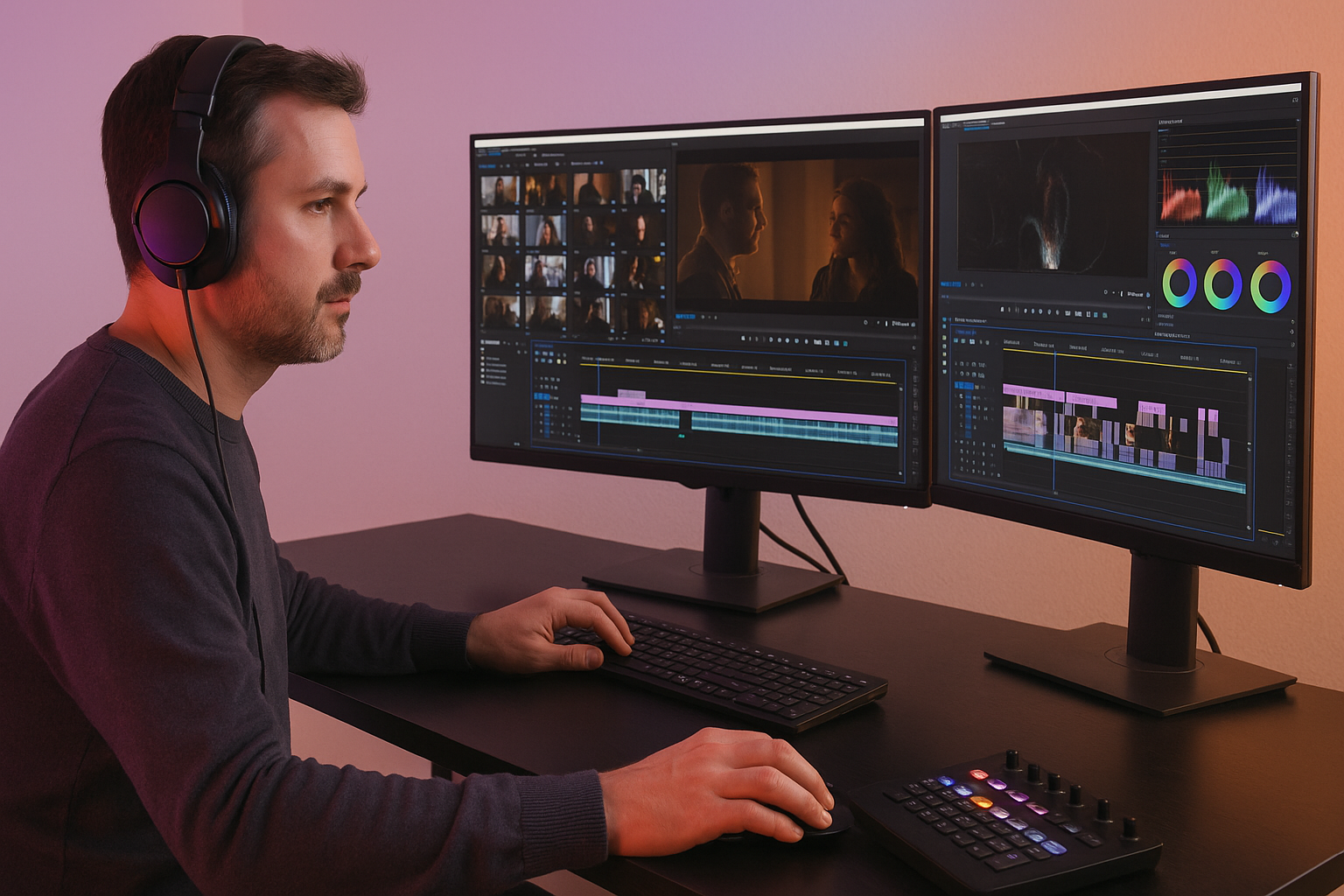
AI-powered editing tools—like Runway and Adobe’s Sensei—automate resizing, cropping, and even content-aware reframing for each platform. This isn’t optional for brands producing at scale: manual cropping means missed deadlines and inconsistent output.
Editing for Algorithmic Favour: Speed, Audio, and Trends
Format isn’t just pixels—it’s pacing, structure, and sound. Social algorithms reward fast-paced edits (1–2 sec shot length), native trending audio, and visual hooks in the first 2 seconds. TikTok’s official Creative Center tracks trending sounds and effects; ignore these, and you’re invisible. Integrating AI tools allows you to auto-sync video cuts to trending tracks and analyse which visuals drive the highest engagement rates.
For more on matching editing style to campaign goals, check out Choosing the Right Marketing Video Style for Your Campaign.
Brand Consistency Across Platforms: The Hidden Format Challenge
Repurposing a TikTok for LinkedIn? Watch your brand colours and logo placement—each platform crops overlays differently. Use “safe zones” (the central 80% of the frame) to ensure key visuals aren’t cut off. AI-powered pipelines let you generate platform-specific crops and overlays automatically, maintaining a unified aesthetic and avoiding the “copy-paste” look that turns off discerning audiences.
For a deeper dive into social-first content strategy, see What Is Social Media Video Content? A Beginner’s Guide.
Stop Guessing. Get Social Video That Delivers.
Vidxen produces AI-optimised, platform-native videos for Instagram, TikTok, and YouTube. Reach more viewers, boost engagement, and keep your brand sharp—without the trial and error.
AI Tools: The Secret to Effortless Multi-Platform Output
Manually re-editing for each platform is a waste of resources. Modern AI tools—like Runway, Adobe Sensei, and ElevenLabs for multi-language dubbing—let you auto-generate correctly cropped, captioned, and even localised versions in minutes. This is how brands go from 2 videos per month to 30+, with no drop in quality or engagement.
Want to see how AI transforms episodic and branded content? Read Best AI Tools for Streamlining Episodic Content Creation.
How Wrong Formats Kill Your Campaign (and How to Fix It)
Uploading a 16:9 video to TikTok? Expect up to 60% lower reach, per HubSpot. Missed safe zones lead to cropped faces and unreadable CTAs. Oversized files get compressed into pixel soup. Fixes: always export vertical (9:16), keep file sizes lean, burn in captions, and use platform-specific templates. AI-driven workflows let you batch-export in every required format—no more guesswork, no more missed engagement.
For a full overview of how AI-powered video production is changing marketing, see our Complete Guide to AI Video Production.
For service details on social-first campaigns, see Social Media Content.
To compare Instagram Reels and TikTok strategies, read Instagram Reels vs TikTok: Which Is Best for Brands?.
FAQ — Best Social Media Video Formats
What is the best aspect ratio for social media videos?
The 9:16 vertical format is the gold standard for Instagram Reels, TikTok, and YouTube Shorts. It fills the mobile screen and maximises engagement. For LinkedIn and Facebook feed posts, 1:1 or 4:5 can also work, but vertical is still preferred for stories and short-form content.
Does using the wrong format really hurt reach?
Yes. Platforms downrank videos with black bars, awkward cropping, or non-native aspect ratios. Industry data shows up to 50–60% lower reach for videos not optimised to platform specs. The algorithm rewards format-native content every time.
What are the ideal video specs for Instagram Reels, TikTok, and YouTube Shorts?
All three prefer 9:16 aspect ratio, 1080×1920 px, MP4 or MOV format. Duration should be 15–90 seconds for Reels, 1–60 seconds for TikTok and Shorts (though TikTok allows up to 10 minutes for some users). Keep file sizes below 250 MB for Reels, 287 MB for TikTok, and 2 GB for Shorts.
How do I add captions and keep quality after compression?
Use hard-burned (baked-in) captions in a large, high-contrast font. Avoid fine text or low-opacity overlays. Export using H.264 codec at 1080×1920 px to minimise quality loss after platform compression. AI tools can automate caption placement and sizing per platform.
Can I use the same video for all platforms?
Not directly. Even with the same aspect ratio, each platform overlays buttons, captions, and profile icons differently. Use platform-specific templates or AI tools to crop, reposition, and re-export for each channel. This ensures nothing important is hidden or cut off.
What tools automate resizing and formatting for social platforms?
Runway, Adobe Sensei, and Kapwing are leading options for AI-powered resizing, auto-cropping, and content-aware reframing. They let you batch-process videos for multiple platforms, saving hours of manual editing while maintaining brand consistency and engagement rates.
How does Vidxen’s Social Media Content service help with format optimisation?
Vidxen uses AI-driven workflows to deliver platform-optimised, vertical-first videos with fast turnaround. Every video is tailored for the specs and engagement triggers of Instagram, TikTok, YouTube, and more. The result: consistent reach, higher engagement, and a unified brand look—without the manual guesswork or missed opportunities.
Where can I learn more about social video content strategy?
Start with our Beginner’s Guide to Social Media Video Content and the Complete Guide to AI Video Production for a comprehensive overview of formats, strategy, and the latest production tech.