
An un-storyboarded marketing video burns days and ₹40,000+ in reshoots, while a storyboarded one ships 2× faster, with 30% fewer revisions and a higher conversion rate. Storyboarding isn’t creative bureaucracy—it’s the difference between “looks fine” and “drives measurable results” in the marketing video production process.
TL;DR
- Storyboards cut production time by up to 50% and reduce costly revisions.
- Well-designed marketing video storyboards clarify messaging and visual flow before a single shot is filmed.
- AI and digital tools have made storyboarding faster and more collaborative for marketing teams.
- Storyboards directly improve ROI, conversion rates, and campaign speed.
What Is a Marketing Video Storyboard—and Why It’s Not Just for Filmmakers
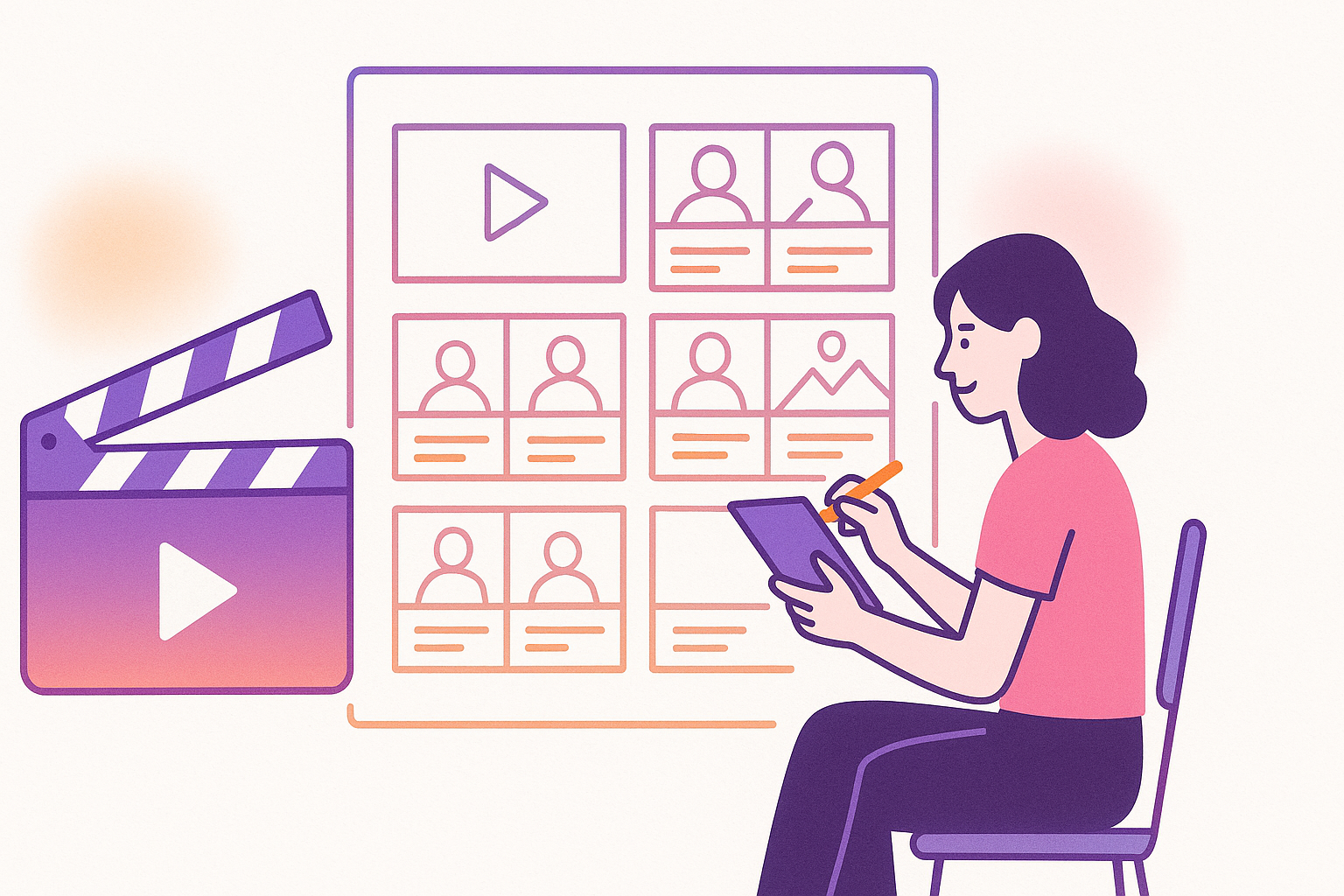
Most marketers still treat storyboards as a “film thing,” not a marketing essential. That’s a mistake. A marketing video storyboard is a shot-by-shot visual plan, aligning script, visuals, and messaging before anyone touches a camera or opens After Effects. In practice, it’s a sequence of sketches, frames, or digital mockups showing exactly how your ad, explainer, or brand film will unfold. This isn’t just about pretty pictures—it’s about de-risking your budget and ensuring every frame serves a conversion goal.
Modern marketing storyboards may combine hand-drawn frames, AI-generated visuals (using tools like Runway or Google Veo), and shot lists. The result: a single reference that aligns creative, client, and production teams—no more “that’s not what we expected” on delivery day.
The Cost of Skipping Storyboards: Hard Numbers
Let’s get specific. A 60-second explainer produced without a storyboard typically faces 2–3 extra rounds of client revision, each adding ₹20,000–₹30,000 in editing, voiceover, and reshoot costs. Industry estimates suggest that up to 35% of marketing video budgets are wasted on avoidable rework, unclear briefs, or misaligned creative. Storyboarding up front adds 1–2 days but cuts 4–7 days off the overall timeline and slashes “surprise” costs by 30–50%.
For digital-first campaigns—think performance ads, SaaS demos, or mobile promos—storyboards also clarify aspect ratios, motion cues, and on-screen text, reducing the chance of platform rejections or last-minute fixes. In short: skipping storyboards is a false economy.
| With Storyboard | Without Storyboard |
|---|---|
| 2–4 days faster delivery | Repeated delays |
| 1–2 revision cycles | 3–5+ revision cycles |
| ₹0–₹10,000 in reshoot costs | ₹40,000–₹80,000 in reshoot costs |
| Clear messaging, higher conversion | Misaligned messaging, lower ROI |
How Storyboards Clarify Messaging and Brand Voice
In marketing, clarity isn’t a nice-to-have—it’s the difference between “cool video” and “this ad boosted signups by 23%.” Storyboards force you to decide, frame by frame: what’s the hook? Where does the product appear? How does the CTA land visually? This process exposes weak messaging, missing information, or brand inconsistencies before they become expensive production problems.
For example, a storyboard for an e-commerce product ad will explicitly show when the price appears, how the product rotates, and what text overlays support the USP. This keeps brand managers, agencies, and video teams aligned—no more “but we wanted the logo earlier” debates after the edit.
For more on ensuring visual consistency, see How Color Grading Creates a Film’s Visual Mood.
Storyboarding in the Age of AI and Digital Tools
Forget the marker-and-paper cliché. Modern marketing video storyboards are built with digital tools—Figma, Boords, Canva, and increasingly, AI-powered generators. Tools like OpenAI’s Sora and ElevenLabs even allow you to preview AI-generated visuals and synthetic voiceovers before a single frame is shot, accelerating feedback loops and helping non-technical stakeholders visualise the end product.
Collaborative storyboarding means agencies, brands, and freelancers can iterate in real time, cutting approval cycles from weeks to days. Version control, easy frame swapping, and instant sharing mean no more “wrong version” disasters. This is not theory—these tools are now standard in agencies delivering high-volume campaign videos at scale.
For a comprehensive breakdown of AI’s impact on the entire video pipeline, see our AI Video Production: The Complete Guide.
Storyboards Directly Impact Marketing ROI and Conversion Rates
The data is not subtle: marketing campaigns that use detailed storyboards see higher conversion rates and faster launches. HubSpot’s 2024 video marketing report found that 87% of high-performing marketing videos began with a visual storyboard or animatic. Why? Because it’s easier to test hooks, swap out messaging, and optimise calls-to-action at the planning stage than after shooting.
Storyboards also de-risk big spends. For a ₹50,000–₹75,000 Instagram ad, a storyboarded approach lets you A/B test two visual flows before committing to production—resulting in a 15–30% lower cost per acquisition (CPA) and measurable improvement in click-through rates.
Want to see how video elements affect emotion and recall? Check How Background Music Shapes the Emotional Impact of TV Serials.
Storyboarding for Different Marketing Video Formats
Not all marketing videos are created equal. A social ad, a B2B explainer, and a cinematic brand film each demand a different approach to storyboarding. For short-form ads (15–30 seconds), storyboards focus on scroll-stopping hooks, rapid product reveals, and visual CTAs. For explainers, they detail transitions, on-screen text, and pacing. For cinematic storytelling, they emphasise mood, location, and movement.
Below is a practical breakdown:
| Format | Storyboard Focus |
|---|---|
| Social ad (15–30s) | Hook, product reveal, CTA visual, aspect ratio |
| B2B Explainer | Step-by-step flow, text overlays, animated transitions |
| Brand Story Film | Mood, setting, narrative beats, logo integration |
| Product Demo | Feature highlights, zooms, usage scenarios |
For examples of how short-form videos drive engagement, see How Educational Short Videos Can Increase Brand Engagement.
Practical Storyboarding Workflow for Marketing Teams
Here’s how a modern marketing team (or agency) deploys storyboards for maximum impact:
- Start with a bulletproof script—clarity here reduces confusion later.
- Break down the script into scenes or beats; sketch (or AI-generate) key frames for each.
- Add annotations: call out text overlays, camera moves, motion graphics, and CTAs.
- Share digitally for collaborative feedback—use Figma, Boords, or Google Slides for version control.
- Refine based on stakeholder and client input, locking creative before production spends begin.
This workflow isn’t just for agencies. In-house marketing teams at brands like Nike and HubSpot rely on digital storyboarding to launch hundreds of videos across platforms with minimal friction, as documented in MIT Technology Review’s coverage of AI-generated video ads.
Storyboards and Compliance: Avoiding Costly Platform Rejections
Storyboards aren’t just a creative tool—they’re your first line of defence against ad platform rejections and legal headaches. By mapping out every frame, you can ensure that all claims, disclosures, and branding elements meet the standards set by platforms like YouTube, Meta, and Google Ads. The Google Ads video policy routinely flags non-compliant elements that could have been caught at the storyboard stage.
For regulated industries (finance, health, pharma), storyboards allow legal and compliance teams to pre-approve scripts and visuals—saving weeks of back-and-forth and reducing the risk of costly take-downs after launch.
Integrating Storyboards into Fast, AI-Powered Video Pipelines
Storyboards are even more crucial in AI-powered video pipelines. With tools like Runway and Sora generating footage and effects at speed, the risk is “garbage in, garbage out”—AI will only amplify unclear direction. A strong storyboard is the blueprint the AI follows, ensuring that generative assets stay on-brand and on-message.
For a practical example, Vidxen’s own marketing videos use AI-powered storyboarding to ship social ads for e-commerce brands in 3–4 days (vs. 7–10 days industry standard), with a 95% first-approval rate and a 20–35% boost in campaign conversion. The storyboard is the control centre for this acceleration.
For more on the role of video in building trust, see The Role of Corporate Videos in Building Brand Credibility.
Want a proven, fast-turnaround process for high-converting marketing videos? Explore Vidxen’s Marketing Videos service.
Want campaign-ready video, not just “content”?
Hand us your brief and see your storyboard in 48 hours—no vague pitches, just actionable visuals and a fixed timeline. Our process delivers scroll-stopping ads, explainers, and brand films that convert.
FAQ — Marketing Video Storyboards
What exactly is a marketing video storyboard?
A marketing video storyboard is a visual plan showing each scene or shot of your video before production begins. It combines sketches, reference images, and notes to outline how the script, visuals, and messaging work together. This blueprint keeps everyone aligned and ensures the finished video delivers on your marketing goals.
How do storyboards reduce production costs and timelines?
Storyboards catch creative and messaging issues early, so you avoid costly reshoots and endless revision cycles. By clarifying every shot, they help you ship videos 2–4× faster and cut avoidable spend by 30–50%. This means more campaigns launched on time and under budget, especially for digital-first marketing teams.
Can AI tools help with marketing video storyboarding?
Yes—AI tools like Runway, Sora, and ElevenLabs can generate reference visuals, synthetic voiceovers, and even animatics for faster iteration. These tools make storyboarding accessible even for non-designers, speed up approvals, and allow for rapid A/B testing of creative ideas before you commit production resources.
Is storyboarding necessary for all types of marketing videos?
While you can technically produce simple videos without a storyboard, any video with a defined goal—conversion, engagement, or branding—benefits from one. Storyboards are vital for ads, explainers, product demos, and any campaign where clarity, speed, or ROI matter. Even short social ads see higher approval rates and better results with storyboarding.
How detailed should a marketing video storyboard be?
It depends on the video’s complexity. For a 30-second ad, 8–12 frames with annotations (text overlays, key actions, timing) is typical. For explainer videos or cinematic brand stories, more detail is required—scene transitions, product close-ups, and motion cues. The key is to make every decision before production, not after.
How do storyboards help with compliance and platform approvals?
Storyboards let you pre-emptively address claims, disclaimers, and branding requirements that ad platforms (like Google Ads or Meta) enforce. This avoids costly rejections or take-downs after launch. For regulated industries, legal and compliance teams can sign off storyboards before production, ensuring campaign safety.
Where can I see examples of marketing video storyboards in action?
Many agencies, including Vidxen, share anonymised storyboard samples as part of their process. You’ll find storyboard examples in industry reports and case studies from HubSpot and MIT Technology Review, showing how high-converting campaigns start with a clear storyboard.
How do I get started with storyboarding my marketing video?
Begin with a clear script, then use digital tools (like Figma or Boords) or even AI generators for the visuals. Map out key scenes, add notes for timing and motion, and share with your team for feedback. Or, shortcut the process—work with a partner like Vidxen that delivers storyboards as part of every marketing video project.
For more on the value of behind-the-scenes content and humanising your brand, see How Behind-the-Scenes Videos Humanize Brands on Social Media.