
A single production designer’s decision—Victorian London or neon-lit dystopia—can double a film’s budget or halve its timeline. Production design in film isn’t about pretty sets; it’s the architecture of entire worlds, shaping what audiences believe, remember, and rewatch.
TL;DR
- Production design is the backbone of immersive cinematic worlds, not just decoration.
- Budgets, timelines, and audience impact are directly shaped by design decisions.
- AI tools are slashing costs and expanding creative options for filmmakers.
- Modern productions blend practical sets, digital assets, and generative backgrounds for efficiency.
What Is Production Design in Film, Really?
Most viewers think of “sets” or “props,” but production design in film is the total visual DNA of a movie world. It’s how Gotham looks different from Metropolis, or why Wes Anderson’s films are instantly recognisable. Production designers collaborate with directors, cinematographers, and VFX leads to define architecture, colour palettes, textures, and even how everyday objects tell the story. The result: a world that feels lived-in, unique, and emotionally resonant.
Hollywood’s biggest franchises—think Marvel’s Wakanda or the Star Wars universe—owe their memorability to production design choices, not just scripts or acting. As The Hollywood Reporter notes, even Oscar-winning films are often defined by their sets as much as their stories.
How Production Design Shapes Audience Perception
Production design is the first thing audiences “feel” before a single line is spoken. The bleak, industrial corridors of Blade Runner (1982) signal dystopia before a single plot point is revealed. In contrast, the sun-drenched, pastel-hued sets of La La Land communicate nostalgia and hopeful romance. This is not accidental. Designers use visual cues—architecture, colour, materials—to evoke mood, genre, and even subtext. According to WIRED, the Barbie movie’s set design generated viral buzz and shaped audience expectations long before release.
When production design is neglected, films feel generic or forgettable. When done well, it creates instant emotional connection and world-recognition—think of the Hogwarts Great Hall or the Overlook Hotel’s endless corridors.
Budgets, Timelines, and the Real Cost of Worldbuilding
The scale of a movie world isn’t just creative—it’s financial. Building a full-scale medieval village can run ₹5 crore–₹20 crore, with months of pre-production. Digital set extensions may cut that to ₹1 crore–₹3 crore and weeks of work, provided the production design team integrates practical and digital elements from the start. The Variety breakdown of 2023’s biggest productions shows design choices can swing costs by 30–50%, especially on VFX-heavy features.
Modern pipelines—which now often include AI-generated backgrounds, virtual scouting, and generative props—are shrinking both budgets and timelines. For example, what previously required 12 weeks of set build can now be achieved in 4–6 weeks with a hybrid approach, reducing labour and material costs by 40–60%.
| Worldbuilding Approach | Typical Cost (INR) | Timeline |
|---|---|---|
| Traditional Sets | ₹5–20 crore | 8–16 weeks |
| Hybrid (Practical + Digital) | ₹1–8 crore | 4–8 weeks |
| AI-Enhanced (Generative) | ₹0.5–3 crore | 2–4 weeks |
For a deeper dive into how video production pipelines are evolving, see AI Video Production: The Complete Guide.
The Art Director vs. Production Designer: Who Does What?
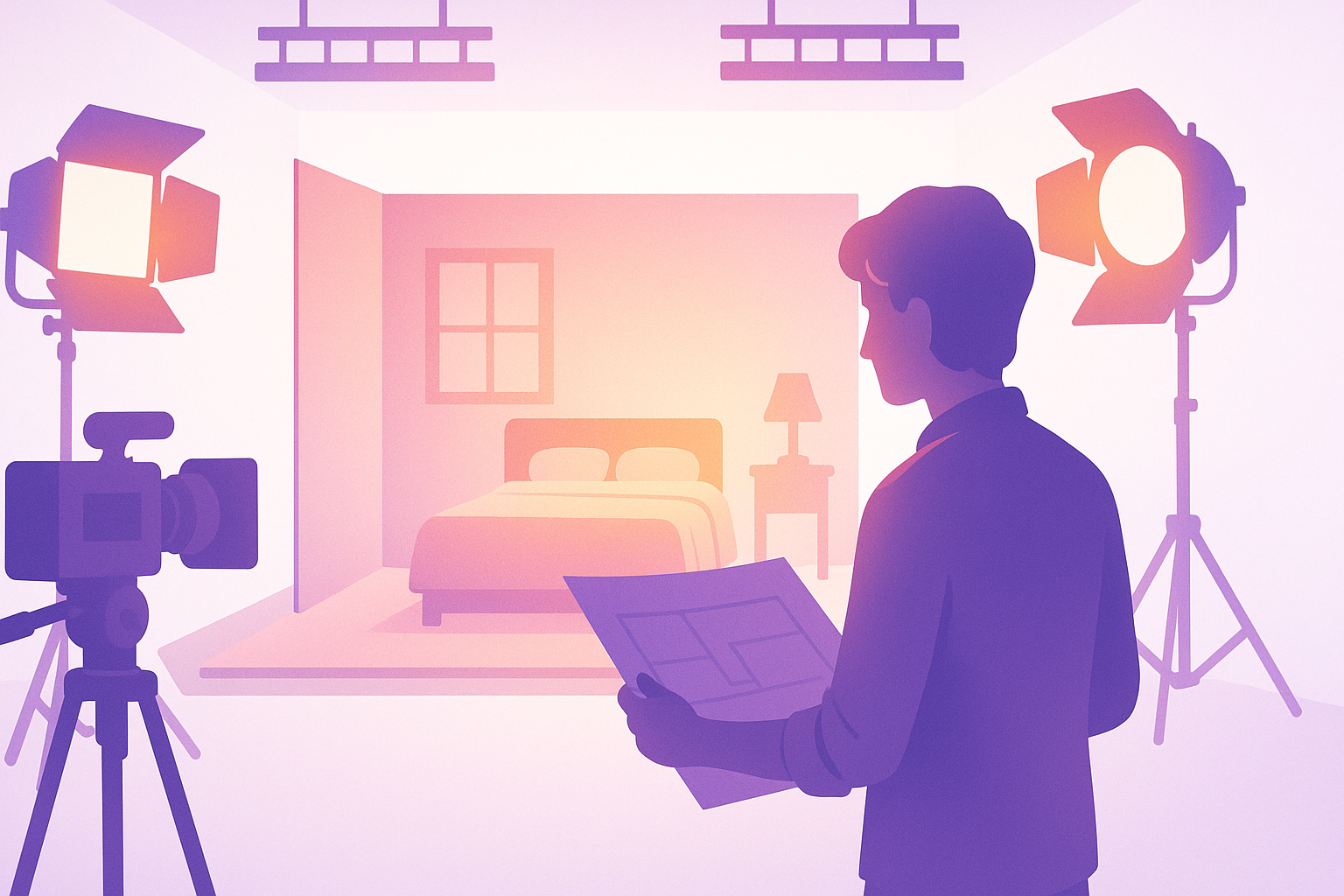
Confusion between “art director” and “production designer” is common. The production designer is the architect of the film’s visual world—defining the look, style, and atmosphere. The art director executes that vision, managing construction, set dressing, and logistics. In major productions, teams can include dozens of specialists: prop masters, set decorators, graphic designers, and AI asset supervisors (a new role as generative tools proliferate).
For context on how storyboarding fits into this process, see How Video Storyboards Improve the Marketing Production Process.
AI, Virtual Production, and the New Era of Movie Worldbuilding
Since 2023, AI-powered tools like Runway, OpenAI’s Sora, and Pika have upended traditional set design. Generative AI can produce photorealistic landscapes, interiors, and even full cityscapes from a text prompt. This isn’t just for sci-fi: period dramas now use AI to recreate lost architecture, and indie productions can match the scope of big-budget films without the overhead.
Virtual production stages (like the LED volumes pioneered in The Mandalorian) let filmmakers “shoot” in infinite locations with real-time feedback. According to McKinsey, studios using virtual production cut location costs by up to 70% and accelerate post-production by several weeks.
Case Studies: Production Design Decisions That Defined Films
Consider Mad Max: Fury Road—its post-apocalyptic world was achieved through a blend of practical vehicle builds and digital desert extensions. The result: six Oscars, including Best Production Design. Or Parasite, which constructed an entire “semi-basement” house on a soundstage to control lighting and mood, a decision praised by Architectural Digest for its narrative impact.
Even low-budget films benefit: AI-driven production design enabled a recent Indian indie feature to convincingly depict 1940s Calcutta, reducing digital matte costs by 80% compared to traditional VFX outsourcing. The world felt authentic—audiences and critics noticed.
For a technical look at how colour grading amplifies production design, see How Color Grading Creates a Film’s Visual Mood.
Best Practices: Integrating Production Design in Modern Filmmaking
Effective production design in film isn’t about maximalism or spending. It’s about early integration and clear communication:
- Involve designers from script stage: Moodboards, reference images, and AI-generated concept art help align vision before costs spiral.
- Hybridise sets and digital assets: Build only what’s necessary; use AI/virtual backgrounds for the rest.
- Optimise for camera and post: Design for how sets will be shot, not just how they look in person. Previsualisation tools (like Unreal Engine or Blender) can spot issues early.
- Budget for iteration: Modern workflows allow rapid prototyping—test multiple looks with AI before committing to builds.
Studios embracing this approach routinely deliver on tighter schedules, with fewer costly reshoots.
For related insights on behind-the-scenes process, see How Behind-the-Scenes Videos Humanize Brands on Social Media.
Bring Your Movie World to Life—Without Hollywood Budgets
Want photorealistic sets, generative backgrounds, and 4K upscaling for your feature or documentary? Our AI-powered pipeline delivers cinematic results at a fraction of studio rates—end-to-end, from pre-vis to final cut.
Common Pitfalls and How to Avoid Them
Films often falter when production design is an afterthought or a cost-cutting casualty. Common mistakes:
- Late-stage design changes: These trigger budget overruns and rushed construction.
- Overreliance on digital fixes: Poorly integrated VFX can break immersion. Plan for “in-camera” realism where possible.
- Ignoring post-production needs: Sets that look good in person may fail under grading or compositing. Test with camera/lighting rigs early.
- Underestimating audience literacy: Modern viewers spot anachronisms and low-effort design instantly—especially in 4K OTT releases.
Careful pre-visualisation and cross-departmental collaboration are the antidotes. AI tools can help, but they’re no replacement for a strong creative lead.
AI-Enhanced Production Design: What’s Possible Now?
AI models can now generate detailed set concepts in hours, not weeks. Need a Victorian street, a Martian colony, or a 1980s Mumbai market? Tools like Google DeepMind Veo and Adobe’s generative AI suite output dozens of options for art directors to refine. AI upscaling can restore archival footage to pristine 4K, making it blend seamlessly with new assets—a boon for historical documentaries and remasters.
But AI is not a replacement for creative direction. It’s a force multiplier for teams that know what they want. The best results come from pairing experienced designers with robust AI pipelines.
Explore our Movie Production service for examples of AI-enhanced worldbuilding in action.
Production Design for OTT and Digital Platforms
OTT and streaming-first films demand production design that holds up at 4K, on both 55-inch TVs and mobile screens. This means sharper textures, fewer shortcuts, and more attention to digital asset quality. AI-driven workflows help maintain consistency and speed, ensuring that even episodic content feels cinematic.
Studios using AI-based colour grading and generative set extensions are meeting the demands of global platforms like Netflix and Amazon Prime Video, where audience expectations for visual quality are higher than ever. For more on this, see How Background Music Shapes the Emotional Impact of TV Serials.
For independent filmmakers, this levels the playing field—your world can look as polished as any studio tentpole, with a fraction of the resources.
For more on our AI-powered pipeline for features, documentaries, and OTT content, visit our Movie Production service page.
FAQ — Production Design in Film
What exactly does a production designer do?
The production designer is responsible for the entire visual world of a film—from sets and props to colour palettes, architecture, and environmental storytelling. They collaborate closely with directors, cinematographers, and VFX teams to ensure every visual element supports the narrative and emotional tone of the story.
How does production design impact the film’s budget?
Production design often accounts for 20–40% of a film’s total budget. Early design decisions—such as building large practical sets versus using digital/AI assets—can increase or decrease costs by crores. Smart integration of digital workflows can dramatically reduce both time and spend without sacrificing quality.
Is AI replacing traditional production designers?
No. AI is a tool, not a replacement. It accelerates concept generation, set extension, and asset creation, but the creative vision and decision-making still depend on experienced designers. The best results come from combining AI with human expertise.
Can small-budget films achieve cinematic worldbuilding?
Yes—especially with hybrid pipelines. AI-generated backgrounds, virtual sets, and smart art direction enable indie filmmakers to create visually rich worlds that rival big-budget productions, often at 30–70% lower cost and in less than half the time.
How does production design differ for OTT vs. theatrical releases?
OTT releases require sharper, more consistent visuals since content is viewed on 4K screens and mobile devices. This means higher standards for digital assets, colour grading, and set detail. AI pipelines help meet these demands efficiently, even for episodic or fast-turnaround projects.
What’s the difference between an art director and a production designer?
The production designer sets the overall visual concept for the film. The art director manages the execution of this vision—overseeing construction, set dressing, props, and logistics. On large productions, there may be multiple art directors working under a single production designer.
How early should production design start in the filmmaking process?
Ideally, production design should begin during script development. Early involvement allows designers to influence story structure, location choices, and budget planning—reducing costly changes later and ensuring a cohesive visual world from day one.
How can I learn more or get support for my film’s production design?
To see how AI-powered production design can work for your feature, short, or documentary, talk to a producer at Vidxen or request a fixed-price quote. Our end-to-end pipeline supports everything from concept to final master, tailored for both studios and independents.