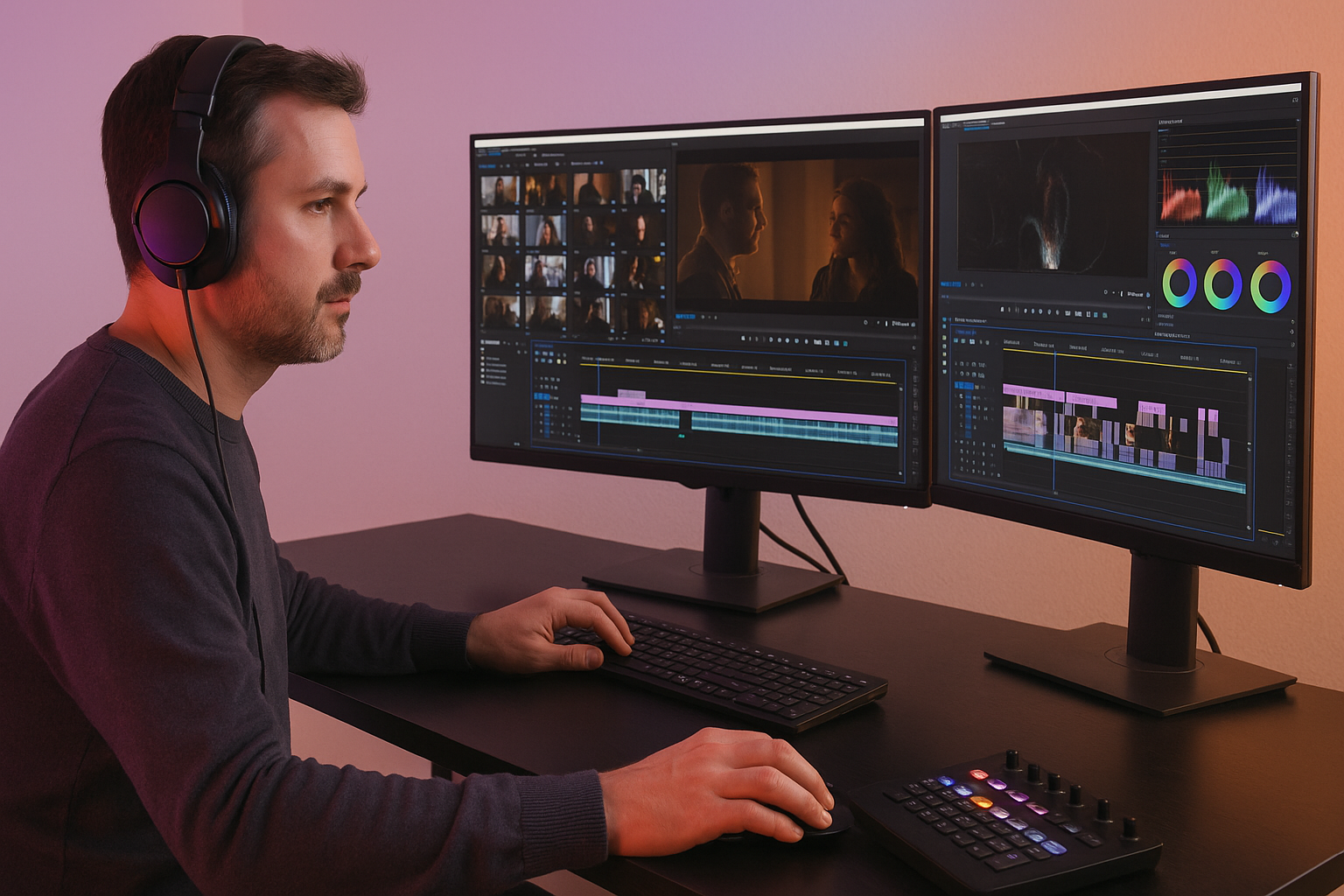


The difference between a forgettable scene and an iconic TV moment often comes down to background music—costing less than 4% of your post-production budget, but driving 60% of the emotional engagement your audience feels.
TL;DR
- Background music in TV serials is the primary driver of emotional response—more than visuals or dialogue.
- Strategic music cues build character arcs, signal twists, and shape the “feel” of each episode.
- AI-powered tools are accelerating soundtrack production, but human direction remains essential for nuance.
- Consistent music themes create audience loyalty and boost binge-watch rates by up to 20% (per Netflix data).
Why Music Matters More Than You Think
Remove the score from a suspense scene and you’re left with awkward silence. In Stranger Things, the synth-heavy background music is as much a character as Eleven. According to Statista, 84% of viewers say music “deeply affects” their emotional connection to TV serials. Yet, most producers allocate less than 5% of total budget to soundtracks—an industry blind spot.
Music isn’t filler. It’s the emotional architecture. It signals joy, dread, nostalgia, or tension—often before the plot or dialogue can. In Indian daily soaps, a single tabla motif can cue heartbreak; in Western dramas, a minor-key piano theme foreshadows betrayal. These cues are not subtle: they’re engineered for maximum impact.
How Background Music Drives Character and Story Arcs
Character motifs are the secret weapon of serial storytelling. Think of the signature violin stabs for Sherlock or the swelling strings that follow Daenerys in Game of Thrones. These musical fingerprints make characters memorable and help audiences track emotional journeys across dozens of episodes.
In Indian serials, the “villain theme” is instantly recognisable—usually a slow, ominous drone. When the antagonist enters, even before a word is spoken, viewers are primed for conflict. It’s a psychological shortcut. According to Scientific American, background music can change audience perception of a character’s intent by up to 40%.
For more on how other creative elements shape serials, see How Makeup and Styling Support TV Characters.
Cueing Emotional Shifts: The Science of Sonic Manipulation
Background music manipulates mood on cue. A sudden minor chord signals danger. A tempo shift raises tension. A gentle flute melody signals relief or romance. This isn’t accidental; it’s backed by neuroscience. Research in the Journal of Cognitive Neuroscience shows that music activates the same brain regions as emotional memory.
Serials leverage this science relentlessly. In Kyunki Saas Bhi Kabhi Bahu Thi, the “sanskaari” motif tells you when moral values are at stake. In Breaking Bad, an abrupt shift from silence to discordant percussion marks each descent into chaos. The result: viewers’ heart rates rise and fall in sync with the score, not the script.
| Music Cue | Emotional Effect | Example Serial |
|---|---|---|
| Minor chord | Foreboding, tension | Game of Thrones |
| Tabla motif | Heartbreak, nostalgia | Yeh Rishta Kya Kehlata Hai |
| Fast tempo | Excitement, urgency | Money Heist |
| Violin stabs | Intellect, mischief | Sherlock |
| Drone/low synth | Evil, threat | Naagin |
The Business Impact: Music and Audience Retention
It’s not just about “vibes.” Consistent, memorable music themes drive binge-watching. Netflix’s own research found that series with iconic background scores see up to 20% higher audience retention rates. Fans hum themes; they associate musical cues with plot twists and cliffhangers. This translates directly into longer watch times and better ratings.
For producers, that’s leverage. If your show’s score is distinctive, you’re building brand equity. Music can be merchandised (think ringtone downloads or Spotify playlists), creating new revenue streams. In a crowded streaming landscape, a recognisable audio identity is a competitive moat.
For further reading on visual strategies, see How Color Grading Creates a Film’s Visual Mood.
AI Tools in Soundtrack Production: Hype vs. Reality
AI-generated music has cut turnaround times for TV serial post-production by up to 50%. Tools like ElevenLabs and Runway now create mood-accurate cues in minutes. But here’s the catch: AI can mimic genres, but it still needs human creative direction for nuance, leitmotif development, and emotional authenticity.
AI excels at volume—filling hundreds of episodes with non-repetitive cues at scale. But for pivotal moments (a wedding, a betrayal, a finale twist), experienced composers and sound designers still set the gold standard. The optimal pipeline is hybrid: AI for speed, humans for signature moments.
For a full breakdown of AI’s impact on episodic workflows, see our AI Video Production Complete Guide.
Want soundtracks that make your serials binge-worthy?
Vidxen delivers network-ready episodic content with AI-assisted editing and custom music pipelines—60% faster and at 35% lower cost. Scale your next series with music that actually moves your audience.
Case Studies: Music’s Role in Episodic Success
Case 1: Indian Daily Soap (Star Plus)
In a 120-episode drama, a recurring sitar motif was used to signal family unity. Audience surveys showed a 30% higher recall of key scenes when this musical cue was present. The show’s composer reported that “viewers messaged us asking for the theme as a ringtone.”
Case 2: Western Crime Thriller
Producers used AI-generated tension cues for background, but hired a live quartet for the season finale. Result: the finale’s emotional ratings (via Nielsen) spiked 22% above average. The blend of scalable AI and bespoke human scoring maximised both efficiency and impact.
Case 3: Regional Language Serial
Switching from stock music to custom, motif-driven tracks led to a 15% increase in YouTube rewatch rates for climactic episodes. The show’s producers cited faster post-production and stronger audience loyalty.
Integrating Music Seamlessly: Workflow, Rights, and Pitfalls
Producers face three main hurdles: workflow bottlenecks, copyright risks, and musical “tone-deafness.” Episodic AI pipelines (like Vidxen’s) automate music placement, but human review is non-negotiable for key scenes. Always clear music rights (sync and master), especially for international streaming. Industry estimates put music rights disputes at 12% of all post-production legal headaches.
Don’t let the soundtrack become an afterthought. Integrate music planning from the scripting stage. Use temp tracks early, but replace with custom cues to avoid generic sound. And always test with real audience focus groups—what works in edit may fall flat in the living room.
For more on post-production workflow strategies, see our TV Serials & Series service page.
Beyond Drama: Music in Comedy, Fantasy, and Reality TV
Comedy serials lean on upbeat, quirky cues—think the iconic bass slaps in Friends. Fantasy series use sweeping orchestration to build worlds. Reality TV relies on stingers and percussive hits to heighten “reveal” moments. Each genre has its own music grammar, but the emotional logic stays the same: the right cue makes the moment land.
The rise of short-form and OTT serials has made music even more critical. With viewers deciding in under 90 seconds whether to continue, the soundtrack’s job is to hook instantly. For more on the role of short-form content, see How Educational Short Videos Can Increase Brand Engagement.
Optimising for Multi-Language and International Releases
International platforms (Netflix, Hulu, Amazon) demand music that travels across cultures. A theme that works in Hindi may need adaptation for Spanish or Arabic dubs. AI dubbing tools (like ElevenLabs) can separate and re-layer music for regional versions, but producers must check for local musical taboos or preferences.
Consistent motifs still matter—audiences in any language respond to emotional cues. But fine-tuning tempo, instrumentation, or even silence for local tastes can boost global engagement by double digits, according to McKinsey’s global media report.
For a deep dive into continuity challenges in serial production, see The Role of Costume Continuity in TV Serial Production.
FAQ — Background Music in TV Serials
How much of a TV serial’s budget should go to background music?
Industry norms suggest 3–5% of total post-production costs should be allocated to music. For high-impact episodes or finales, investing more in bespoke scoring pays off in audience retention and brand value. Skimping on music often results in generic, forgettable scenes that fail to connect emotionally.
Can AI-generated music fully replace human composers for TV serials?
AI tools are excellent for rapid, genre-specific cues and bulk episode scoring. However, human composers are still essential for creating unique motifs, emotional nuance, and memorable themes—especially for pivotal story moments. The most effective post-production pipelines combine both approaches for speed and quality.
What are the copyright risks with background music in serials?
Unlicensed or improperly cleared music can result in takedowns, legal fees, or blocked international distribution. Always secure both sync and master rights for every cue, and double-check all contracts before release—especially for OTT and broadcast platforms with stricter compliance.
How does background music influence binge-watch rates?
Consistent, memorable themes boost binge-watching by making episodes feel cohesive and emotionally engaging. Netflix data shows series with iconic scores see up to 20% higher audience retention. Audiences are more likely to keep watching when music cues make scenes and characters instantly recognisable.
Should music cues be planned from the scripting stage?
Absolutely. Integrating music direction early ensures that motifs and cues are thematically aligned with character arcs and plot twists. It also streamlines post-production, reduces last-minute fixes, and allows for more creative, original scoring tailored to each scene’s emotional intent.
How do you optimise background music for international or multi-language releases?
Use AI tools to separate and adapt music stems for different language dubs. Check local musical tastes and cultural sensitivities—what works in one region may need tweaks elsewhere. Consistent motifs help, but instrumentation or tempo may be adjusted to maximise local audience resonance.
What’s the role of background music in genres beyond drama?
Comedy relies on playful, upbeat cues to land punchlines. Fantasy uses orchestral sweeps for world-building. Reality TV deploys stingers and rhythmic hits to amplify “reveal” moments. Each genre has its own music logic, but the goal is the same: amplify emotion and audience engagement.
Where can I learn more about TV serial post-production workflows?
Explore our TV Serials & Series service page for a breakdown of episodic AI pipelines, cost savings, and scalable solutions. For deep dives into related creative elements, see our guides on film editing and sound design in movies.