
Category: TV Production

  • How TV Serial Production Schedules Are Planned

    How TV Serial Production Schedules Are Planned

    Scheduling a 120-episode TV serial isn’t a calendar exercise—it’s a war room operation. One missed day on set can cost ₹7–12 lakh, delay the entire season, and throw streaming deals off-track. Here’s how real-world TV serial production schedules are planned, optimised, and delivered at scale.

    TL;DR

    • TV serial production schedules juggle cast, locations, and post—one missed link can derail an entire season.
    • Modern pipelines use AI tools for script breakdown, continuity, and real-time schedule optimisation.
    • Turnarounds are now 2–4× faster than in 2020, with 35% post-production cost savings for top studios.
    • Success depends on data-driven planning, not creative guesswork.

    Why TV Serial Schedules Are Unforgiving

    Unlike films, a TV serial’s schedule is a moving train—no luxury of months between shoots or long post cycles. For a 5-days-a-week prime-time drama, missing a single taping can mean a blank spot in a broadcaster’s slot, lost ad revenue, and penalties. Hollywood Reporter notes that streaming series face even tighter deadlines, with platforms like Netflix demanding “air as you shoot” batch deliveries. Indian GECs (General Entertainment Channels) often need 20–25 minutes of edited, network-ready content every weekday—with zero tolerance for delay.

    Every department—writing, direction, cast, art, post—must sync to the hour, not the week. A single actor’s illness or a rain-soaked outdoor set can trigger a domino of rescheduling, reblocking, and budget overruns. The real cost? Producer trust, and the next season’s greenlight.

    Breaking Down the TV Serial Production Schedule

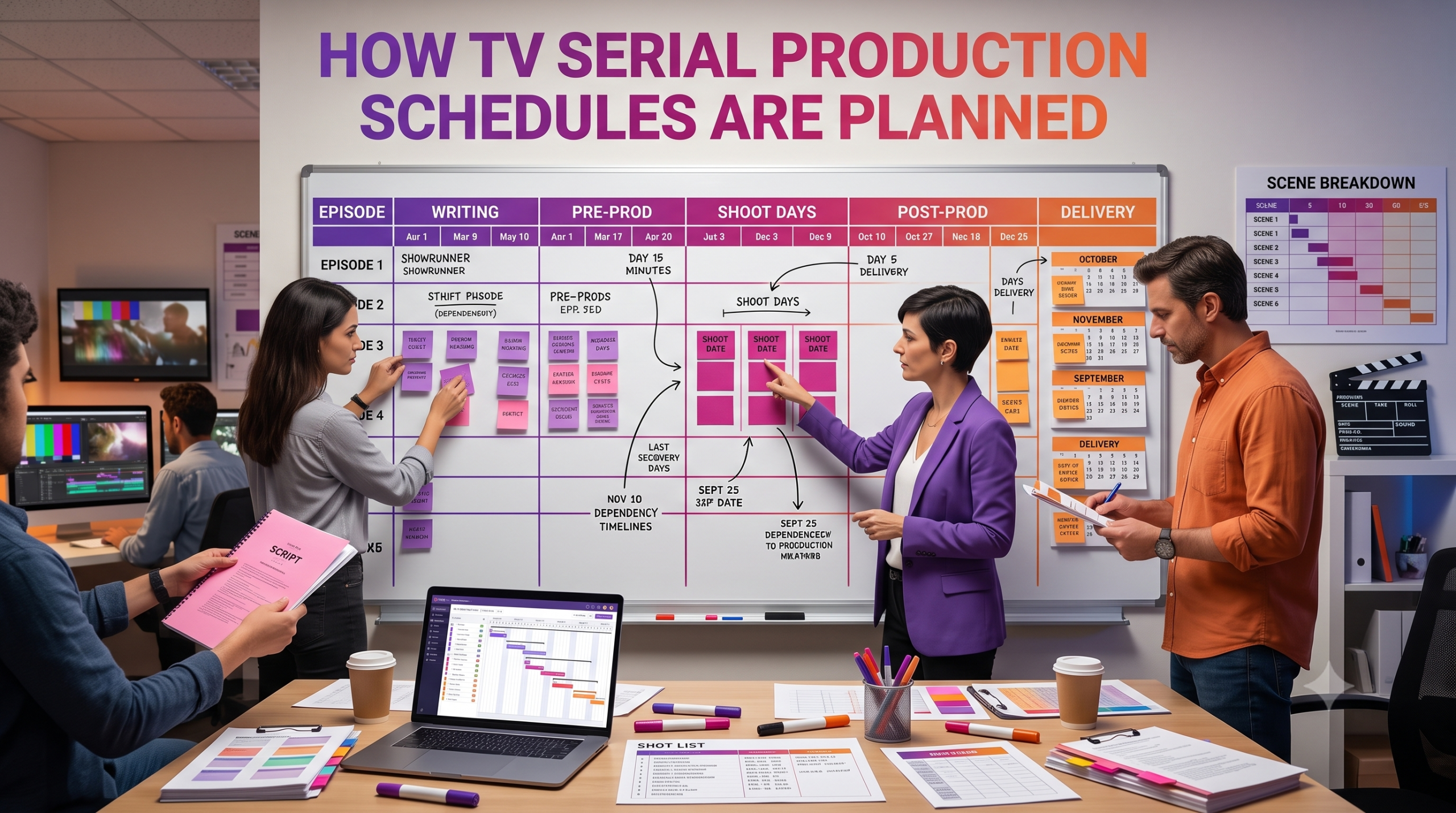
    Serial production schedules are mapped in layers: macro (season), meso (block or arc), and micro (daily call sheets). Here’s how it typically breaks down:

    Schedule Layer What’s Planned Timeframe
    Season Masterplan Episode count, delivery dates, key arcs 3–12 months
    Block Scheduling Batching episodes with overlapping sets/cast 2–6 weeks
    Shoot Calendar Scene-by-scene, location-by-location Daily/weekly
    Post-Production Roster Editing, VFX, dubbing, QC Parallel or rolling

    Studios use tools like Movie Magic Scheduling, StudioBinder, and increasingly, AI-driven platforms such as Runway and Google DeepMind’s experimental AI for film/TV to automate breakdowns, flag conflicts, and visualise dependencies. The goal: compress the timeline without sacrificing quality or continuity.

    Script to Screen: The Schedule’s Critical Path

    Every TV serial schedule starts with a script breakdown—identifying every character, set, prop, effect, and special requirement. AI tools can now tag and cross-reference these elements in minutes, not days. This feeds into a “critical path” plan: which scenes must be shot first (due to actor availability, location windows, or VFX requirements), and which can be picked up later.

    For example, an outdoor wedding sequence with 40 extras and a rain risk is often scheduled at the season’s start, even if it appears in episode 30. This way, if weather strikes, there’s buffer for reshoots. The post-production team is looped in from day one to flag scenes with heavy editing or VFX, so no one is “waiting for footage” down the line.

    According to Statista, the number of scripted series in the US has doubled since 2012—yet average episode turnaround is down by 40%, thanks to smarter scheduling and automation.

    Juggling Cast, Crew, and Locations: The Real Bottleneck

    For a 100-episode run, cast contracts, location permits, and crew availability become a Rubik’s Cube. GECs in India frequently shoot 2–3 episodes in parallel units, with lead actors dashing between sets. Mistimed call sheets can trigger cascading chaos—actor double-bookings, location lockouts, or crew overtime bills that eat the margin.

    Modern productions rely on real-time scheduling dashboards, often powered by AI, to flag conflicts and suggest optimal reassignments. McKinsey reports that studios using AI-driven scheduling see 25–35% fewer overruns and more consistent delivery to networks or OTT partners.

    AI Pipelines: Compressing Post-Production Timelines

    In traditional TV, post-production was a serial bottleneck—editors waited for the last shot, then raced to cut, grade, and dub under pressure. Now, AI-assisted editing and cloud-based asset management allow parallel workflows. Scenes can be ingested, rough-edited, and even QC’d by AI as shooting wraps for the day.

    VFX-heavy scenes are flagged early, so AI tools (like Runway Gen-2 or Pika) can generate pre-vis or automate rotoscoping. Dialogue is transcribed and translated in real time, enabling near-instant dubbing for regional releases. The result: network-ready episodes delivered 2–4× faster, with 35% lower post budgets than 2019 averages.

    For a deeper dive on how AI pipelines are transforming the entire video production process, see our Complete Guide to AI Video Production.

    Contingency Planning: Weather, Illness, and the Unknown

    No schedule survives first contact with reality. That’s why top studios build in 10–20% contingency—days, budget, or both. AI-powered risk models now analyse past data to predict high-risk days (e.g., monsoon outdoor shoots, festival dates, or mass-cast scenes) and advise buffer allocations.

    When COVID-19 hit, productions that had digital asset management and remote-editing pipelines (see WIRED on Hollywood’s pandemic-era AI post) were able to pivot fastest. The new normal: schedule for disruption, not just efficiency.

    For more on how large-scale productions handle the unexpected, read How Film Producers Manage Large-Scale Movie Productions.

    Data-Driven Scheduling: The Producer’s New Superpower

    What separates a hit serial from a perpetually late one? Data. Studios now benchmark performance against industry averages—cost per minute, edit cycle time, reshoot rate—and use dashboards to spot bottlenecks early. AI tools forecast when an episode will be network-ready, not just “shot,” and alert producers to risks in real time.

    This isn’t about replacing the human producer. It’s about augmenting their decision-making, so creative calls don’t sabotage the delivery clock. The result: more consistent quality, fewer fire drills, and a better shot at renewal from platforms like Netflix or Star Plus.

    For more on character and story continuity, which is tightly linked to scheduling, see How Characters Are Developed Across Multiple TV Episodes.

    Scale Your Serial with an AI-Powered Pipeline

    Want to eliminate scheduling chaos and cut post timelines by half? Vidxen’s TV Serials & Series service configures bespoke episodic pipelines for your show. Hit your broadcast or OTT deadlines, every week—no drama off-screen.

    Case Study: How an Episodic AI Pipeline Rescued a Serial Launch

    In 2023, a Hindi family drama slated for Star Bharat faced a crisis: a lead actor’s illness meant 6 episodes risked missing their air dates. By deploying AI-assisted script breakdown, dynamic scheduling, and cloud-based post, the production team reshuffled scenes, prioritised parallel editing, and delivered every episode on time. The cost of AI pipeline setup: ₹8 lakh. The cost of missing an air date: ₹25 lakh in lost ad slots, plus reputational damage. The maths is simple.

    OTT-first productions go further—using Netflix’s Workflow Suite for collaborative scheduling, automated delivery checks, and real-time QC. The lesson? Data and AI don’t replace creative direction—they protect it, at scale.

    For more on the creative and operational role of the showrunner in this process, see The Role of a Showrunner in Modern TV Series Production.

    Internal Collaboration and Communication—The Hidden Schedule Risk

    Even the best schedule falls apart without airtight communication. Daily standups, version-controlled scripts, and centralised dashboards (not WhatsApp chaos) are now standard on major sets. AI-driven tools can auto-notify departments of changes, flag missing assets, and track approvals. This reduces “Chinese whispers” delays, especially with distributed teams and remote post.

    Studios embracing these workflows see higher morale, fewer last-minute scrambles, and more predictable outcomes. The end result: episodes that land on time, every time, keeping both network and audience confidence intact.

    See how Vidxen’s TV Serials & Series service builds these collaboration pipelines for drama, comedy, and reality shows of any scale.

    Conclusion: The Future of TV Serial Scheduling

    The TV serial production schedule is no longer a static Excel sheet—it’s a living, data-driven system that adapts to risk, opportunity, and creative changes. AI and automation don’t replace producers or directors, but they give them the superpowers needed to hit deadlines, control costs, and scale up for OTT-era demands. The studios that master this will own the next decade of episodic storytelling.

    If you’re ready to overhaul your episodic pipeline, see how Vidxen’s TV Serials & Series unlocks rapid, network-ready delivery for your show.

    FAQ — TV Serial Production Schedules

    What’s the difference between TV serial and film production schedules?

    TV serial schedules are continuous, high-volume, and deadline-driven—missing a day can mean a missed broadcast slot. Film schedules are more flexible, often with longer gaps for post-production and fewer hard delivery dates. TV serials require parallel workflows and tighter day-to-day coordination across departments.

    How do AI tools improve TV serial scheduling?

    AI tools automate script breakdown, flag cast/location clashes, and optimise shooting orders. They provide real-time dashboards for producers, suggest contingency plans, and enable faster post-production with automated editing and QC. The result: fewer delays, lower costs, and more consistent episode delivery.

    What’s the average turnaround for a TV serial episode?

    With AI-driven pipelines, 22–25 minute episodes can be shot, edited, and delivered in 2–4 days—compared to 7–14 days in legacy workflows. High-end drama serials or VFX-heavy series may take longer, but even these are now routinely delivered 2× faster than five years ago.

    How do studios handle last-minute disruptions (e.g., illness, weather)?

    Studios build in 10–20% contingency in both time and budget. AI models predict high-risk days and suggest buffer allocations. Parallel shooting units, dynamic call sheets, and remote post-production enable teams to pivot quickly without derailing the entire schedule.

    What’s the impact of scheduling delays on budgets and network deals?

    Every missed day can cost ₹7–12 lakh in direct expenses, plus lost ad revenue or penalties from broadcasters/OTT platforms. Chronic delays risk reputational damage, lower renewal odds, and can even trigger contract terminations. This is why robust scheduling is mission-critical for TV serials.

    How are post-production bottlenecks avoided in modern TV pipelines?

    Modern pipelines enable parallel post—scenes are ingested and rough-edited as they’re shot, with AI-assisted QC and asset management. VFX and dubbing tasks are flagged early, and cloud-based workflows allow distributed teams to work simultaneously, slashing wait times between shoot and delivery.

    Can AI fully automate TV serial scheduling?

    No. AI augments but doesn’t replace human producers and directors. It handles repetitive, data-driven tasks—script breakdown, conflict flagging, timeline optimisation—so creative leaders can focus on storytelling and on-set decisions. The best results come when AI and humans work in tandem.

    How do I get started with an AI-powered TV serial production pipeline?

    Start by mapping your current workflow, identifying recurring bottlenecks, and consulting with a studio experienced in AI-driven episodic production. Vidxen configures custom pipelines for broadcast and OTT, handling everything from script to network delivery. Hand us your brief to get a fixed-price quote in 24 hours.

  • How Characters Are Developed Across Multiple TV Episodes

    How Characters Are Developed Across Multiple TV Episodes

    Iconic TV characters aren’t born in a pilot—they’re engineered, episode by episode, using granular continuity, writers’ rooms, and AI-driven tracking. For every Walter White or Fleabag, there’s a team ensuring growth, consistency, and surprise across 10, 50, or 200 episodes—without losing the thread or the audience.

    TL;DR

    • TV character development across episodes is a structured, multi-layered process involving writers, showrunners, and post teams—not just the actors.
    • Continuity tools and AI-driven tracking now help manage complex character arcs and avoid plot holes, even across 100+ episodes.
    • Real growth comes from planned arcs, feedback loops, and adapting to audience and platform data.
    • Modern episodic pipelines—like Vidxen’s—combine human creativity with automation for scalable, consistent character journeys.

    Character Arcs: From Pilot to Finale

    TV character development across episodes isn’t about random quirks or catchphrases. It’s about engineering a believable transformation that makes viewers stay invested. Writers sketch out “macro arcs”—where each main character begins, how they change, and the endpoint. For example, in Breaking Bad, Walter White’s journey from mild-mannered teacher to criminal mastermind was mapped from the start, even if the details evolved per season. This macro planning is the antidote to the “season five amnesia” that plagues lesser shows.

    Good arcs are driven by internal conflict, not just plot events. Consider Fleabag—her emotional unraveling is as systematic as any procedural, with each episode revealing a new layer. Successful shows document these arcs in writers’ bibles and episode trackers, ensuring the journey is intentional, not accidental.

    Writers’ Rooms: The Engine of Episodic Consistency

    The myth: the head writer sits alone, crafting every twist. The reality: TV rooms are collaborative machines, with story editors, staff writers, and showrunners debating every beat. Weekly “arc meetings” map which character gets the spotlight, what’s revealed, and what’s held back for sweeps. This is where continuity lives or dies.

    For serials like Succession or The Crown, showrunners rely on detailed documentation—character grids, timeline spreadsheets, and even AI tools for tracking relationships and unresolved plot points. Writers Guild of America standards now encourage digital episode bibles, making it easier to manage multi-season complexity. The result: characters evolve at a pace tuned for binge or weekly release without contradiction or drift.

    Continuity: Avoiding Character Drift and Plot Holes

    Nothing breaks immersion faster than a character “forgetting” their backstory or suddenly acting out of type. Continuity editors, script supervisors, and now AI-driven story analysis tools flag inconsistencies in dialogue, wardrobe, and motivation. Runway’s story continuity modules let post teams cross-check scripts and footage for mismatches—critical for long-running shows with multiple directors and writers.

    Case in point: in Game of Thrones, fan scrutiny and massive production scale led to well-documented continuity errors (the infamous coffee cup). Modern pipelines use AI to tag every character’s appearance, location, and emotional state per scene, reducing manual error and supporting “binge-proof” storytelling.

    AI-Assisted Tracking and Automation in Character Development

    Manual tracking breaks down at scale. Episodic AI pipelines now tag and analyse character beats, emotional arcs, and relationships across seasons. Tools like Google DeepMind’s AI story engines and OpenAI’s research on narrative structure allow teams to visualise a character’s journey, flag sudden shifts, and even simulate likely audience reactions to big reveals. This isn’t about replacing writers—it’s about giving them the data and guardrails to stay consistent when producing 10+ hours of content per season.

    For producers managing multiple teams, these tools mean fewer reshoots, faster approvals, and the ability to scale up to 50-episode runs without losing narrative cohesion. The result: tighter, more believable character journeys, even when multiple writers and directors rotate through a series.

    Adapting Character Arcs Based on Feedback and Data

    TV is no longer a one-way medium. Streaming platforms, led by Netflix and Amazon, provide showrunners with real-time audience engagement data—where viewers pause, binge, or drop off. Think with Google highlights how platforms use data to fine-tune storylines and character focus in near real time. Writers increasingly adjust arcs based on what resonates, introducing new layers or accelerating growth if viewers respond positively (or negatively) to a character.

    Classic example: Jesse Pinkman in Breaking Bad was originally slated for an early exit, but audience response and actor performance led to a radically expanded role. Modern series now bake this flexibility into their pipelines, using both human intuition and platform analytics.

    Multi-Episode Production: Keeping Characters and Worlds Consistent

    Producing 10, 50, or even 200 episodes isn’t just about story—it’s about maintaining visual and emotional continuity. Character wardrobes, sets, and even camera angles are logged and referenced per episode. AI-assisted editing and asset management platforms (like Adobe Frame.io) now automate much of this, flagging deviations in look or tone. For shows produced at scale, this means less time spent fixing continuity errors and more time spent on original storytelling.

    For more on the nuts and bolts of episodic pipelines, see How AI Is Revolutionizing TV Serials & Series.

    Scale Your Show with Consistent Character Journeys

    Vidxen’s episodic AI pipelines and creative direction help you maintain character and world consistency, whether you’re producing 12 or 120 episodes. Eliminate continuity headaches, accelerate approvals, and deliver network-ready serials without sacrificing narrative depth.

    Showrunner Techniques: Balancing Evolution and Familiarity

    Showrunners walk a tightrope—push characters to evolve, but don’t lose what makes them recognisable. Techniques include “reset episodes” (where a character returns to baseline after a major arc), slow-burn reveals, and “pivot points” at season breaks. Some use colour-coded timelines, others rely on AI-powered dashboards that visualise emotional beats per episode. The goal: keep viewers hooked with both growth and comfort.

    For a detailed breakdown of the showrunner’s role in orchestrating these balances, see The Role of a Showrunner in Modern TV Series Production.

    Case Studies: Memorable Character Journeys Across TV

    Consider the evolution of Arya Stark in Game of Thrones—mapped with precision from “lost child” to “master assassin,” her arc is a masterclass in multi-season planning. In The Office (US), Michael Scott’s growth from cringe to empathy was tracked through writers’ bibles and actor feedback. Statista reports that shows with strong character continuity see up to 30% higher completion rates among binge-watchers.

    Show Character Arc Device Continuity Tools
    Breaking Bad Macro arc, micro pivots Writers’ bibles, digital trackers
    Stranger Things Ensemble web, evolving relationships AI-driven script analysis, visual asset logs
    Fleabag Layered emotional reveals Episode beat sheets, real-time feedback
    The Office Incremental growth, feedback loops Character grids, actor notes

    For a closer look at long-form story development, see How TV Serial Writers Develop Long-Running Storylines.

    Integrating Production, Post, and Creative for Character Continuity

    Character development isn’t just a writers’ room concern. Directors, editors, and post teams all play a role in ensuring continuity. AI-assisted editing now flags discrepancies in tone, wardrobe, and even facial expression across episodes. This is critical for multi-episode production, where scenes are shot out of order and guest directors rotate in. The best pipelines—like those used at Vidxen—integrate creative, technical, and post workflows, so every department sees the same character data in real time.

    Want to see how scalable, AI-driven pipelines keep characters and worlds consistent across massive TV projects? Explore our TV Serials & Series service.
    For a comprehensive guide to modern AI video pipelines, see AI Video Production: The Complete Guide.

    FAQ — TV Character Development Across Episodes

    How are character arcs planned for an entire TV season?

    Writers and showrunners map out “macro arcs” before filming starts, detailing where each character begins and ends the season. Episode outlines, character grids, and digital bibles ensure each beat is tracked, allowing for both planned growth and real-time adjustments. This reduces narrative drift and ensures a satisfying, cohesive journey for viewers.

    What tools help maintain character consistency across episodes?

    Modern productions use a mix of writers’ bibles, character grids, timeline spreadsheets, and AI-powered trackers. These tools log everything from wardrobe to relationship dynamics. AI platforms can now flag continuity errors in script, performance, and even visual details, streamlining multi-episode production and post workflows.

    How do showrunners adapt character arcs based on audience feedback?

    Streaming platforms provide granular data on viewer engagement. Showrunners and writers analyse this data to see which characters resonate, then adjust pacing, focus, or even expand roles in response. This feedback loop is integrated into the writers’ room, allowing for agile development without sacrificing narrative coherence.

    Can AI actually improve character development in TV serials?

    AI doesn’t replace writers, but it handles tracking, flagging inconsistencies, and visualising complex arcs over long runs. By automating these technical aspects, creative teams can focus more on storytelling and less on manual error checking—especially valuable for large-scale, multi-episode productions.

    How do multi-episode productions avoid continuity errors?

    Continuity editors, script supervisors, and AI-driven asset trackers work together to log all character, costume, and set details. Automated checks in post-production flag mismatches so they can be fixed before release. This is especially crucial when episodes are shot out of order or have rotating directors.

    What’s the difference between a character arc and a plot arc?

    A character arc focuses on internal transformation—how a character’s beliefs, motivations, and relationships change. A plot arc is about external events. The best series intertwine both, ensuring the character’s evolution drives the story rather than just reacting to plot twists.

    Why do some long-running shows suffer from “character drift”?

    Character drift happens when a series lacks clear documentation or consistent creative oversight. As writers and directors change, small inconsistencies add up, leading characters to act out of type. Modern pipelines and AI tracking reduce this risk, maintaining continuity even in 100+ episode runs.

    Where can I learn more about episodic production pipelines?

    For a deep dive into episodic AI pipelines and scalable production, explore our TV Serials & Series service or read our complete guide to AI video production for TV, film, and streaming platforms.

  • The Role of a Showrunner in Modern TV Series Production

    The Role of a Showrunner in Modern TV Series Production

    One showrunner can make or break a $20M TV series—balancing writers’ rooms, network notes, and delivery deadlines while steering the creative ship. In the era of streaming, AI, and global pipelines, the role is more demanding, and more crucial, than ever.

    TL;DR

    • Showrunners are both chief creative and operational heads of a TV series, not just “head writers.”
    • They’re responsible for story arcs, budget, casting, and delivery—bridging creative and business.
    • AI and streaming platforms have expanded the scope and complexity of the showrunner’s job.
    • Effective showrunners build scalable pipelines, ensuring quality and speed across multi-episode seasons.

    What Exactly Is a Showrunner? Not Just a “Head Writer”

    Forget the cliché—showrunners aren’t just the most senior writer. In modern TV series production, the showrunner is the creative CEO. They oversee everything: story arcs, writers’ rooms, casting, budget, production schedules, and post-production. As Variety’s explainer on showrunners notes, the role fuses creative vision with operational command, making them the single point of accountability for a show’s success or failure.

    Major platforms like Netflix and Amazon don’t greenlight a series unless a seasoned showrunner is attached. The “show bible,” continuity, and final cuts—everything funnels through this one role, especially in high-budget, multi-episode productions.

    Key Responsibilities: From Writers’ Room to Delivery

    The job spans creative and business. Showrunners:

    • Lead the writers’ room and set overall story direction
    • Supervise casting, directorial hires, and department heads
    • Manage the budget—often $1M–$5M per episode for premium dramas
    • Approve scripts, edits, and final cuts
    • Handle network/platform feedback and ensure broadcast compliance
    • Oversee post-production (VFX, sound, delivery formats)

    On a 10-episode season, showrunners juggle creative decisions with relentless deadlines. As The Hollywood Reporter details, the showrunner is often on set daily, but also in edit bays, and at the negotiating table with studios.

    Why the Showrunner Role Has Become Even More Critical

    In the 1990s, a “show creator” could hand off production to a producing team. Not now. Streaming platforms demand 8–13 episode seasons, rapid turnarounds (8–12 months), and international delivery. Audiences expect consistent quality, with zero tolerance for continuity errors or uneven pacing.

    Modern showrunners must:

    • Maintain continuity across dozens of characters and storylines
    • Ensure each episode meets technical standards (HDR, 5.1 audio, C2PA compliance)
    • Work with AI-driven post-production tools for editing and VFX
    • Coordinate global teams and remote writers’ rooms

    It’s no surprise that showrunners for hits like “Stranger Things” and “The Crown” are named in the press as much as the show’s stars. Their fingerprints are on every creative and strategic decision.

    AI, Automation, and the Evolving Showrunner Toolbox

    Today’s showrunner isn’t just a storyteller—they’re a systems architect. AI-assisted editing, automated continuity checks, and scalable episodic pipelines are now standard, not sci-fi. Platforms like Google DeepMind’s video synthesis and OpenAI’s Sora are shifting what’s possible in previsualisation and post-production.

    For example, a 10-episode web series using AI-driven post (multi-cam editing, dialogue clean-up, VFX) can ship in 4–6 months instead of a year, with 30–40% cost savings. But the showrunner must still make final creative calls, set standards, and ensure the tech serves the story—not the other way around.

    For a deep dive into how AI is actually used in serials and not just hyped, see How AI Is Revolutionizing TV Serials & Series.

    Showrunner vs. Producer vs. Director: Who Does What?

    Confusion is common—especially outside the US and UK. Here’s the breakdown:

    Role Main Scope Final Authority?
    Showrunner Story, writers, budget, creative direction, delivery Yes (series-wide)
    Producer Logistics, hiring, contracts, day-to-day operations Partial (budget/logistics)
    Director Directs specific episodes, executes vision No (per episode)

    On most TV series, the showrunner is the only role with veto power over every department. Producers keep the trains running, and directors bring episodes to life, but the showrunner’s vision ties it all together.

    Scaling for Streaming: The Showrunner’s Pipeline Challenge

    Netflix, Amazon, and Disney+ expect not just one good episode, but a consistent, binge-worthy season. Showrunners must design pipelines that handle:

    • Multi-episode story arcs and cliffhangers
    • Parallel post-production (editing, VFX, dubbing) to meet tight release windows
    • Quality control across international dubs and broadcast formats
    • Data-driven creative decisions (viewer drop-off rates, A/B tested edits)

    According to Statista’s analysis of streaming budgets, average per-episode costs have risen 30–50% in the last five years. Showrunners are tasked with delivering more content, faster, with fewer errors. The job demands scalable, repeatable processes—often involving AI-assisted review and automated compliance checks.

    Continuity, Consistency, and the Show Bible

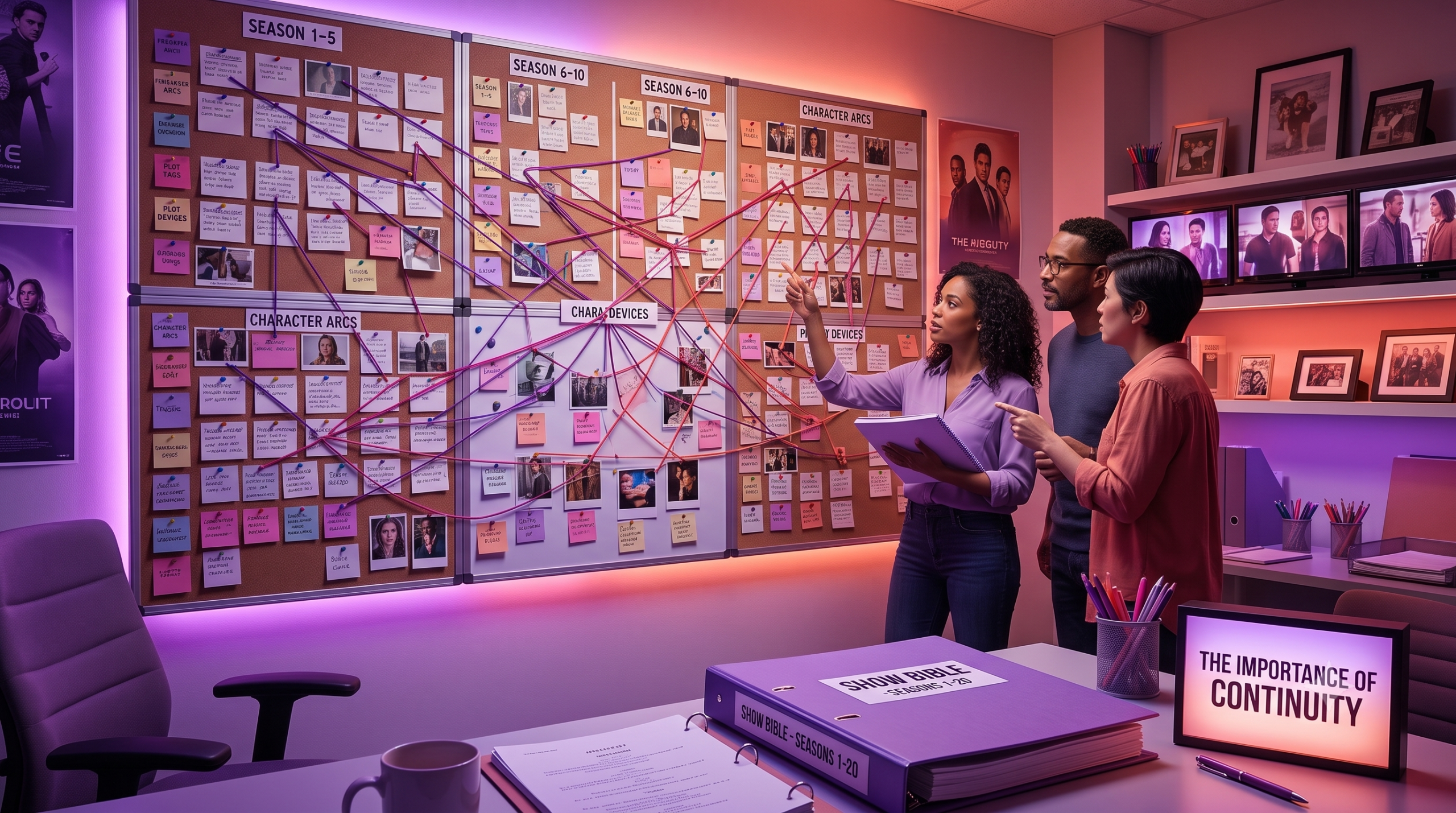
    For a series to work, continuity is non-negotiable. The “show bible”—a living document tracking every character, location, and timeline detail—is maintained by the showrunner and their team. Inconsistencies (a costume error, a plot hole) can break immersion and damage a brand.

    Modern showrunners use digital show bibles, integrated with script tools and AI-driven continuity checkers. As W3C’s AI in Media standards outline, the integration of metadata and automated error detection is becoming an industry norm—especially for large-scale, multi-language productions.

    Case Study: Showrunning a Regional Web Series with AI Pipelines

    Consider a 20-episode regional drama for an OTT platform. The showrunner oversees:

    • Script development with multilingual writers’ rooms
    • AI-assisted editing for rapid assembly and versioning
    • Automated dubbing and subtitle generation (cutting costs by 80%)
    • Post-production workflows optimised for both regional and global standards

    The result: consistent quality, faster turnaround, and budget savings—without sacrificing creative control. This is where scalable episodic pipelines and the showrunner’s leadership converge.

    For more on the writing side, see How TV Serial Writers Develop Long-Running Storylines.

    Need a showrunner-level pipeline for your TV series?

    Scale your episodic content with AI-optimised workflows, story continuity, and network-ready delivery. Producers and showrunners: Brief us on your next series and see what a modern pipeline can do for your budget and schedule.

    Showrunners and Broadcast Standards: Delivery Is Non-Negotiable

    It’s not enough to deliver a great story—your episodes must also pass technical muster. Showrunners are responsible for ensuring every file meets platform specs: 4K/HDR, surround audio, subtitles, and accessibility metadata. Failures can mean costly re-edits or missed release windows.

    As outlined in C2PA’s content provenance standards, delivery now includes digital provenance and anti-tampering metadata, especially for international OTT platforms. Showrunners must coordinate with post teams to embed this data from the start.

    For an overview of all production stages, see Pre-Production vs Production vs Post-Production: Understanding the Filmmaking Process.

    How Showrunners Integrate Data, AI, and Creative Vision

    The modern showrunner’s toolkit includes more than scripts and storyboards. Analytics dashboards, AI-driven edit suggestions, and real-time feedback loops are now standard. As McKinsey’s research on streaming production shows, data-driven content decisions can boost viewer retention by 15–25%—but only if the creative vision stays front and centre.

    Ultimately, the best showrunners filter data and tech through the lens of story. They use the tools to reinforce, not replace, the human spark that keeps audiences coming back.

    For a practical look at visual leadership, read How Cinematography Shapes the Visual Identity of a Film.

    For network-ready TV serial production with AI-driven pipelines and showrunner-level project management, see our TV Serials & Series service.

    FAQ — The Role of a TV Showrunner

    What is the primary role of a TV showrunner?

    A showrunner is the chief creative and operational authority on a TV series. They oversee the writers’ room, manage budgets, supervise post-production, and ensure creative vision aligns with network or platform requirements. Unlike directors or producers, the showrunner’s decisions shape every episode and the series as a whole.

    How does a showrunner differ from a producer or director?

    Producers handle logistics and day-to-day operations, while directors focus on executing individual episodes. The showrunner has end-to-end authority, setting story arcs and managing both creative and business aspects. They are ultimately responsible for the show’s quality, budget, and delivery.

    How has AI changed the showrunner’s job?

    AI tools now handle editing, VFX, and continuity checks, allowing showrunners to scale production faster and more cost-effectively. However, showrunners must still make key creative decisions and ensure technology enhances, not overrides, the story and character consistency.

    Why is continuity so critical in TV series production?

    Continuity maintains the believability of a show. Inconsistencies—whether in costumes, story, or set design—break immersion and can alienate viewers. Showrunners use detailed “show bibles” and digital tools to track every element, ensuring seamless storytelling across episodes and seasons.

    What are the biggest challenges for showrunners today?

    Modern showrunners face compressed timelines, rising budgets, global distribution demands, and new tech like AI. They must balance creative vision with operational efficiency, maintain quality across multiple platforms, and manage increasingly complex production pipelines.

    How do showrunners ensure delivery meets network and streaming standards?

    Showrunners work closely with post-production teams to ensure episodes meet all technical specs: 4K, HDR, audio, subtitles, and digital provenance. They use automated QC tools, follow industry standards (like C2PA), and maintain strict oversight of every delivery before network or platform submission.

    Can a showrunner manage multiple series at once?

    It’s possible, but rare. Most showrunners focus on one series at a time due to the job’s demands. Some may oversee multiple projects if supported by strong co-showrunners or executive producers, but quality and consistency risk dropping if bandwidth is stretched too thin.

    How do I find a showrunner or showrunner-level production service?

    Look for teams with proven experience in episodic content, strong creative leadership, and a track record of delivering on time and budget. For AI-driven pipelines and scalable, showrunner-level project management, see our TV Serials & Series service.

  • Choosing the Right Studio for TV Serial Production

    Choosing the Right Studio for TV Serial Production

    In 2024, a 10-episode TV drama can be shot, edited, and delivered in broadcast formats for 35% less cost and 60% faster—if you choose the right production studio with scalable, AI-driven pipelines.

    TL;DR

    • Studio choice makes or breaks your series’ budget, timeline, and consistency.
    • AI-powered studios cut post costs by up to 35% and production time by 60%.
    • Demand transparent pricing, proven episodic workflows, and broadcast-ready delivery.
    • Compare real outcomes: continuity, scalability, and creative control matter as much as tech.

    Why Studio Selection Determines Serial Success

    Producing a 12-episode series isn’t just about scripts and cast. Your choice of production studio directly impacts continuity across episodes, turnaround for each edit, budget overruns, and whether your final cut passes Netflix’s technical checks. Traditional studios often struggle with scale, while AI-powered or hybrid studios can automate continuity, multi-cam edits, and even language versions—at a fraction of the old cost.

    According to Statista, average per-episode costs for Indian TV serials range from ₹10–50 lakh, with post-production making up 30–40%. Studios that deploy AI-assisted editing and asset management can reduce these costs and keep quality consistent across seasons.

    Types of TV Serial Production Studios: What Actually Matters

    Forget the industry hype—“state-of-the-art” is meaningless unless it impacts delivery. Here’s a breakdown of the real studio models in 2024:

    Studio Type Key Features Best For Risks
    Traditional Studio Manual editing, on-site teams, legacy VFX High-budget, single-language, slow timelines Long turnaround, inflexible, higher costs
    AI-Driven Studio AI-assisted editing, asset tracking, episodic pipelines Multi-episode, multi-language, rapid delivery May lack deep creative direction if unchecked
    Hybrid Studio Human creative + AI automation Quality + scale, custom requirements Requires clear workflow integration

    Studios like Runway and Adobe’s Sensei are shaping how AI integrates into post-production, but true quality comes from pairing automation with experienced producers. The best studios offer both.

    Critical Factors for TV Serial Production Studio Comparison

    Choosing a studio for your series is not about who has the shiniest gear. It’s about measurable outcomes. Here’s what to scrutinise:

    • Continuity & Consistency: Does the studio guarantee character, environment, and tone continuity across episodes? AI-powered asset tracking and style-matching matter here.
    • Turnaround Time: How many days per episode, from shoot to final delivery? AI studios can deliver in 2–4 days per episode for web series, versus 1–2 weeks for manual shops.
    • Cost Transparency: Are post-production, VFX, and multi-language dubs itemised? AI dubbing can be ~1/10th the cost of traditional methods (ElevenLabs).
    • Broadcast Format Compliance: Can the studio deliver in Netflix, Amazon, or regional network specs?
    • Scalability: Will the pipeline break if you double your episode order mid-season?

    For the full landscape of AI-driven production, see our AI Video Production Complete Guide.

    Cost, Timeline, and Quality: Real Studio Benchmarks

    Studios rarely publish their true numbers, but here’s what industry buyers actually see in 2024 for a 30-minute drama episode:

    Model Avg. Cost/Episode (INR) Post Timeline Continuity Tools Multi-Language Options
    Traditional ₹18–35 lakh 7–14 days Manual, error-prone Manual dub, high cost
    AI-Driven ₹12–22 lakh 3–5 days AI asset tracking, style matching AI dub, 1/10th cost
    Hybrid ₹14–25 lakh 4–6 days Human+AI, custom workflows Flexible, rapid scaling

    McKinsey’s 2024 report on generative AI in media highlights that studios using AI for editing and VFX cut post timelines by up to 60%. Quality is not sacrificed—if the human creative team is involved in the loop.

    For more on pipeline optimisation, see Best AI Tools for Streamlining Episodic Content Creation.

    Assessing Studio Workflows: What to Ask Before Signing

    Studios love glossy showreels, but you need to dig deeper. For a true TV serial production studio comparison, grill them on these:

    • Asset Management: How are props, costumes, and locations tracked for continuity?
    • Script and Edit Feedback: Can you iterate on scripts and rough cuts in real time? Is there a cloud-based review system?
    • VFX and AI Integration: Are visual effects, upscaling, and corrections handled in-house or outsourced?
    • Language and Accessibility: Is subtitling, dubbing, and regional adaptation automated or manual?
    • Delivery and Archive: Will you get masters in ProRes, IMF, or other broadcast formats? How long is your content archived?

    Studios using tools like Google DeepMind’s Veo or Runway for generative video and continuity management are raising the bar for episodic efficiency. Ask for a breakdown of their workflow, including human vs AI touchpoints.

    Creative Control vs. Automation: Finding the Balance

    Automation can handle 80% of the grunt work—multi-cam sync, rough cuts, asset tagging, and even basic VFX. But directors and showrunners still need final cut authority, especially for story pacing, emotional beats, and character arcs. The best studios offer dashboards for creative review while automating tedious tasks.

    For a practical look at workflow balance, see AI-Driven TV Series: Ensuring Consistency Across Seasons.

    Scalability and Future-Proofing: Can Your Studio Grow With You?

    If your series is renewed or a streaming platform asks for double the episodes, will your studio keep up? AI-powered and hybrid studios are built for scale—handling multiple episodes in parallel, automating versioning for regional markets, and delivering on tight streaming deadlines. Studios still tied to manual workflows will bottleneck your ambitions.

    For those venturing into digital series, see our Beginner’s Guide to Producing a Web Series.

    Ready to Scale Your Series?

    Get a transparent, fixed-price quote for your TV serial production. Our AI-assisted pipelines deliver consistent quality, rapid turnaround, and network-ready formats—no surprises, just results.

    Red Flags: When to Walk Away from a Studio

    Not every studio is equipped for modern episodic production. Watch for these warning signs:

    • No episodic workflow or asset tracking: Expect continuity errors and disjointed episodes.
    • Opaque pricing: If costs aren’t broken down, expect budget overruns.
    • Manual-only post pipeline: Slow, error-prone, and hard to scale.
    • No experience with OTT/broadcast delivery: Your series could be rejected by platforms.
    • Limited or no support for multi-language or accessibility: A non-starter for global or regional markets.

    For a broader comparison of video production agency models, see How to Choose a Social Media Video Production Agency.

    How to Compare Studios: A Practical Checklist

    Every producer’s needs differ, but this checklist covers the essentials for a TV serial production studio comparison. Use it before your next RFP:

    Criteria What to Look For
    Continuity Management AI or hybrid tracking of characters, props, locations
    Timeline Per Episode 4–7 days (AI/hybrid), 10+ days (manual)
    Post-Production Cost Transparent, itemised, AI-driven savings
    Broadcast/OTT Delivery Proven compliance with Netflix, Hotstar, Amazon specs
    Multi-Language & Accessibility Automated dubbing, subtitling, regional versions
    Scalability Ability to double episode load, parallel pipelines
    Creative Control Director/producer dashboards for review and approval

    For studios offering all of the above, review the TV Serials & Series service for a detailed breakdown of episodic AI pipelines and post-production workflow.

    For context on choosing video styles, see Choosing the Right Marketing Video Style for Your Campaign.

    FAQ — TV Serial Production Studio Comparison

    What’s the key difference between AI-driven and traditional TV serial studios?

    AI-driven studios automate asset tracking, editing, and versioning, cutting post timelines by up to 60% and reducing costs by 30–40%. Traditional studios rely on manual processes, which are slower and prone to continuity errors. The best results are achieved when AI is paired with human creative oversight.

    How much does it cost to produce a TV serial episode in 2024?

    Industry averages range from ₹12–35 lakh per 30-minute episode, depending on studio model and scope. AI/hybrid studios typically quote 20–35% less than manual shops, especially for multi-episode or multi-language series. Always demand an itemised estimate before committing.

    How fast can a modern studio deliver a finished episode?

    AI-driven and hybrid studios deliver in 3–6 days per episode, including post and VFX. Traditional, manual studios often take 7–14 days. Rapid delivery is critical for web/OTT series with weekly drops or rolling releases.

    Can studios guarantee broadcast/OTT compliance?

    Only studios with experience in Netflix, Amazon, or Disney+ delivery can reliably guarantee compliance. Ask for recent deliverables in ProRes, IMF, or platform-specific formats. Studios with automated QC and export pipelines are far more reliable for network-ready content.

    How does AI improve continuity and reduce errors in serials?

    AI-powered asset management logs props, costumes, and set layouts, flagging inconsistencies across episodes. Automated style matching helps ensure characters, lighting, and sound remain consistent, dramatically reducing manual rework and reshoots. This is especially crucial for long-running or multi-director series.

    What should I ask a studio before signing a contract?

    Request a workflow breakdown, itemised pricing, broadcast delivery samples, and references for similar multi-episode projects. Insist on clarity around creative review stages, language/versioning options, and continuity management. If answers are vague, look elsewhere.

    Can I switch studios mid-season if things go wrong?

    It’s possible, but disruptive. Choose studios with transparent asset management and transfer policies. If you anticipate scaling or changing partners, negotiate ownership and access to project files, masters, and metadata before production starts.

    Where can I learn more about episodic AI pipelines?

    For a full breakdown of AI-assisted serial production, see our AI Video Production Complete Guide and the TV Serials & Series service page, which details pipeline features, broadcast delivery, and multi-episode case studies.