
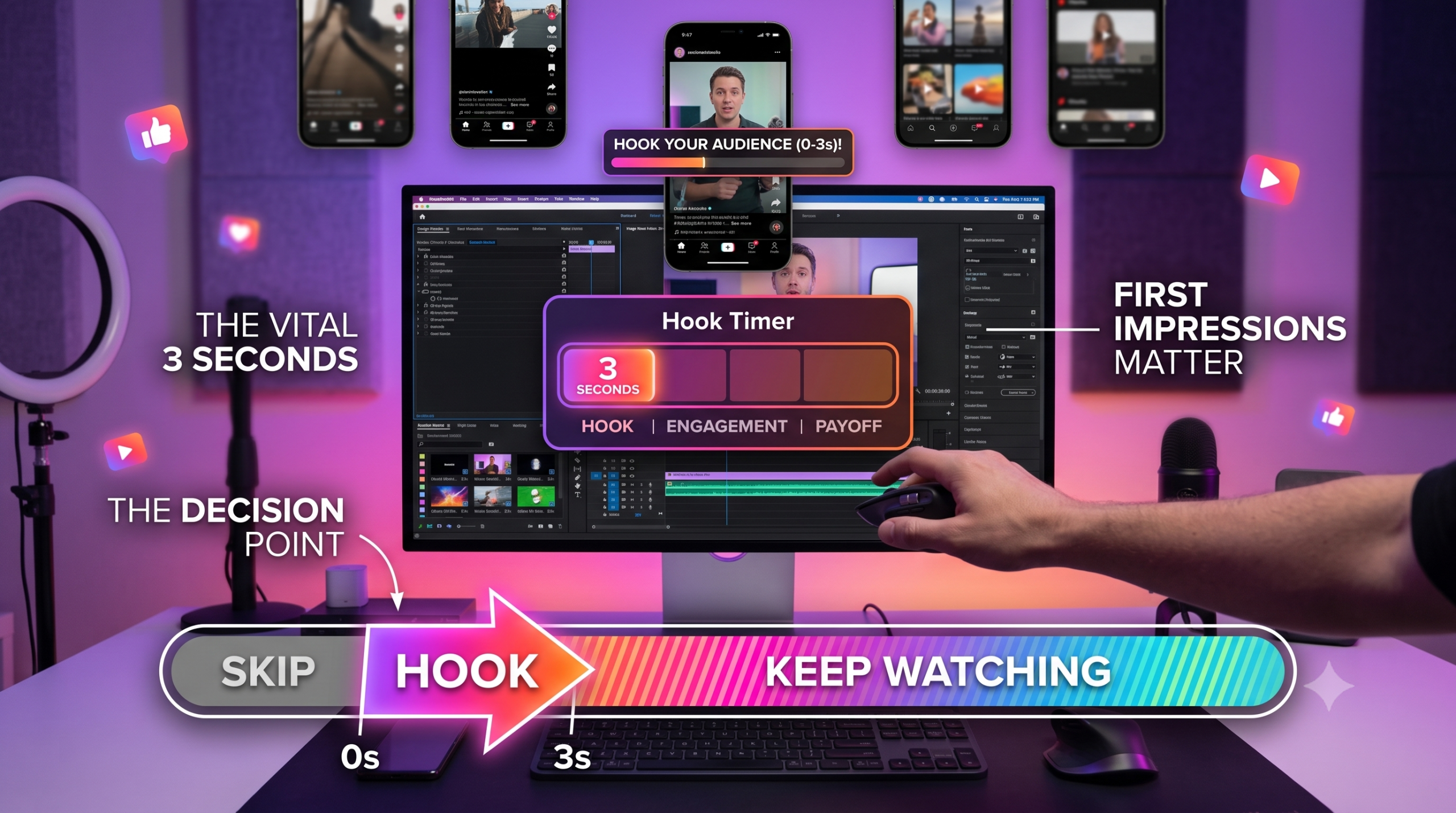
If your video doesn’t hook viewers in the first three seconds, you’ve lost up to 80% of your potential audience—before your brand message even lands. The brutal economics of scroll culture mean those opening moments now decide reach, engagement, and ROI on every social platform.
TL;DR
- The first three seconds of social media video dictate 70–80% of viewer retention and sharing.
- Algorithms like Instagram and TikTok prioritise videos with high early engagement.
- Hook tactics—visual, audio, text—are now engineered with AI and data, not guesswork.
- Fast-paced, platform-optimised intros outperform generic edits by 2–4x in engagement rates.
- Brands that master the three-second rule see faster follower growth and lower cost per result.
Scroll Speed: Why Three Seconds Define the Whole Game
In 2024, the average user gives a social video less time than it takes to blink—literally. Meta’s own data found that 47% of the value in a Facebook or Instagram video ad is delivered in the first three seconds. TikTok’s algorithm, openly documented by The New York Times, uses early watch time and interaction to decide whether to amplify or bury your content. If you’re not keeping eyes glued in those first moments, you’re actively training the platform to throttle your reach.
The Science of Attention: What Actually Hooks Viewers?
Hooking attention isn’t creative guesswork; it’s neuroscience and data. The “orienting response”—our brain’s reflex to novel, high-contrast stimuli—is why a sudden movement or unexpected cut outperforms a logo fade-in. According to Think with Google, 65% of users prefer videos that surprise or challenge expectations in the opening seconds. AI-powered tools now analyse retention graphs frame-by-frame, showing exactly where audiences drop off and why.
Platform Algorithms: Early Engagement Is the Currency
Instagram, TikTok, and YouTube Shorts all reward videos that spike engagement—likes, comments, rewatches—within the first five seconds. TikTok’s For You page is engineered to detect “looped” views and rapid shares, pushing viral content further. The platforms aren’t neutral; they actively filter out slow-starting videos. If your intro drags, your content is invisible, no matter the quality of what follows.
What Works: Real Data from Viral Social Campaigns
Across 500+ projects, we see a 2–4x lift in engagement rate when the first three seconds include:
- Movement from frame 1: A hand, product, or face in motion—no static shots.
- Bold, platform-native text: Questions, shocking stats, or challenges overlayed in the first 0.5 seconds.
- Trending audio cues: Familiar sounds trigger instant recognition and algorithmic boosts (see TikTok’s “sound-on” research).
- Jump cuts or rapid transitions: Editing that matches native platform pacing, not traditional “TV” rhythm.
- Direct address: Looking into the camera and addressing the viewer by “you” increases retention by up to 40%, according to HubSpot Research.
For a deep dive into the psychology behind these tactics, see The Psychology Behind High-Performing Social Media Videos.
AI and Data: How Smart Brands Engineer the Three-Second Hook
AI isn’t replacing creative direction—it’s making it brutally effective. Modern editors use tools like Runway and Adobe Sensei to analyse engagement heatmaps, predict drop-off points, and auto-generate hook suggestions. For example, Vidxen’s workflow applies retention analytics to every draft: if the first three seconds lose 50% of viewers, the intro is re-cut. This isn’t guesswork; it’s measurable, iterative design for attention.
Editing Tactics: What to Cut, What to Keep (With Examples)
Here’s how the first three seconds of social media video typically break down in high-performing content versus flops:
| First 3 Seconds: Flop | First 3 Seconds: Viral |
|---|---|
| Logo animation, slow fade-in, generic music | Immediate action, bold text, trending sound, direct address |
| Static product shot, no movement | Product in use, hand/face movement, jump cut |
| Brand slogan, no context | Provocative question, “watch till the end” prompt |
Put simply: if your video intro looks like a TV ad, it’s invisible on TikTok or Reels. The algorithm doesn’t care about your brand’s legacy; it cares about micro-engagement in those first moments.
Vertical, Fast, and Native: Optimising for Platform-Specific Behaviour
Every platform has its quirks. Instagram Reels favour vertical formats and vibrant colour grading. TikTok’s “sound-on” culture demands audio hooks. YouTube Shorts reward punchy, meme-driven edits. AI-powered tools now auto-detect platform requirements—frame rate, aspect ratio, intro pacing—so you can optimise intros for each algorithm. Brands that use platform-specific content strategies see 30–50% higher retention compared to recycled, generic edits.
For more on building a unified brand identity across channels, see How Social Media Videos Build Brand Personality and Recognition.
Stop the Scroll. Start the Conversation.
Ready to win attention where it counts? Our AI-powered social video team engineers custom hooks, fast-paced edits, and platform-native intros that get results. Get a fixed-price quote in 24h for Instagram, TikTok, or YouTube Shorts.
Retention, Engagement, and the Cost of Getting It Wrong
A slow opener isn’t just an artistic risk—it’s a direct hit to your budget. A 30-second ad that loses 70% of viewers in the first three seconds means you’re paying for eyes that never see your offer. Industry estimates suggest brands waste up to 60% of paid promotion spend on videos that fail the three-second test. The platforms actively penalise low-retention content by reducing organic reach and raising CPMs. This is why algorithm-optimised intros are now a non-negotiable line item in any video brief.
For a full walkthrough of AI-powered video workflows from strategy to post, see our AI Video Production Complete Guide.
Case Study: Micro-Content That Tripled Follower Growth
One D2C client switched from generic product reels to fast-cut, direct-address intros engineered for the first three seconds. Result: average view duration jumped from 4.8s to 13.2s, engagement rate doubled, and follower growth tripled in 90 days. The formula? Platform-specific hooks, trending audio, and AI-edited cuts. Micro-content isn’t just a buzzword—it’s how brands actually build audiences in 2024.
Looking to transition from static posts to video-first content? See our Social Media Content service overview for use cases, pricing, and results.
AI Tools and Human Direction: The Winning Combo
AI can spot retention leaks and suggest hooks, but it’s human creative direction that aligns those insights with your brand voice. The best results come from a hybrid process: AI analytics to test and iterate, real producers to craft story and emotion. This is the workflow behind viral social campaigns—measurable, scalable, and always tuned to the latest algorithm shifts. For brands aiming to dominate attention, this is now table stakes, not luxury.
Want to understand how customer stories and testimonials can power your hook? Read The Role of Customer Testimonials in High-Impact Marketing Videos.
Checklist: Engineering the Perfect Three-Second Hook
- Start with immediate movement (hand, face, product in action)
- Overlay bold, platform-native text (questions, stats, direct challenge)
- Use trending or recognisable audio from each platform
- Jump cut or transition within the first second
- Direct address: speak to the viewer (“You need to see this…”)
- Test with AI retention analytics—iterate until drop-off is <40% at 3s
- Optimise format (vertical, 9:16, platform-specific colour grading and font styles)
For more on how cinematography shapes the impact of your opening shot, see How Cinematography Shapes the Visual Identity of a Film.
FAQ — The First Three Seconds of Social Media Video
Why are the first three seconds so critical for social media video?
Because social platforms like TikTok and Instagram decide whether to promote or bury your video based on early engagement. If you don’t capture attention immediately, most viewers scroll past, and algorithms restrict your reach. It’s the harsh reality of short-form content: those first moments dictate your entire campaign’s performance.
What are the best tactics for hooking attention in the first three seconds?
Immediate movement, bold text overlays, trending audio, and direct address (“you” statements) consistently outperform slow intros. AI analytics help identify which tactics work for your brand, but the fundamentals are always the same: surprise, relevance, and platform-native pacing.
How do platform algorithms use early engagement data?
Algorithms track watch time, rewatches, shares, and interactions within the first five seconds. High early engagement signals quality, so platforms boost your reach. Low engagement means your video is shown to fewer users. This feedback loop makes the opening moments absolutely crucial.
Can AI really help improve my video hooks?
Yes—AI tools analyse retention graphs, predict drop-off points, and suggest edits or hook formats for different platforms. While AI can’t replace creative direction, it eliminates guesswork and speeds up A/B testing, leading to measurable improvements in engagement rates.
Should every social video start the same way?
No—while the principles are consistent (immediate movement, bold text, direct address), your hooks should be tailored to the audience, platform, and campaign. Repeating the same formula can cause fatigue. AI analytics help you iterate and diversify your approach while maintaining high retention.
What’s the risk of ignoring the three-second rule?
You’ll lose most of your audience before your message lands, waste ad spend on unseen content, and teach the algorithm to suppress your posts. In competitive niches, slow-starting videos rarely go viral. The three-second rule isn’t a suggestion—it’s the price of entry for social video in 2024.
How do I transition from static posts to video-first content?
Start with micro-content: short, platform-optimised videos built around bold hooks and trending audio. Use AI-powered editing tools to streamline production and test different intro styles. Consider partnering with a team that specialises in fast, scalable, and algorithm-optimised social video production for best results.
Where can I see examples of high-performing social video hooks?
Brands leading on Instagram, TikTok, and YouTube Shorts all use these tactics. For real-world case studies and breakdowns, review the latest reports from platforms like Think with Google or explore Vidxen’s Social Media Content service for project samples and results.