
Most brands waste half their video budget by mismatching content to customer intent—an awareness ad when the lead is ready to buy, or a product demo when they barely know your brand. Here’s how to build marketing videos that match every stage of the customer journey, with real cost, timeline, and ROI benchmarks.
TL;DR
- Video content must match customer journey stage to maximise ROI
- Awareness, consideration, and decision require different formats, hooks, and calls to action
- AI-powered production can cut costs by 50–70% and shrink timelines to days, not weeks
- Examples, pricing, and frameworks provided for each stage
Why “One-Size-Fits-All” Video Fails: The Journey Mismatch Problem
Uploading a single “brand video” and expecting results across the funnel is a guaranteed way to burn your budget. A Statista survey found that video ad effectiveness drops by over 40% when messaging doesn’t match the viewer’s journey stage. That’s the difference between ₹500,000 wasted and ₹350,000 converted. If you push a sales-heavy product demo to cold leads, expect scrolls—not clicks.
Effective video marketing means mapping content types to awareness, consideration, and decision phases—each with their own format, hook, and CTA. The cost to produce these videos has dropped sharply thanks to AI tools like Runway and Pika, but strategy still beats speed. The right video at the wrong time is just expensive noise.
The Three Key Stages: Awareness, Consideration, Decision
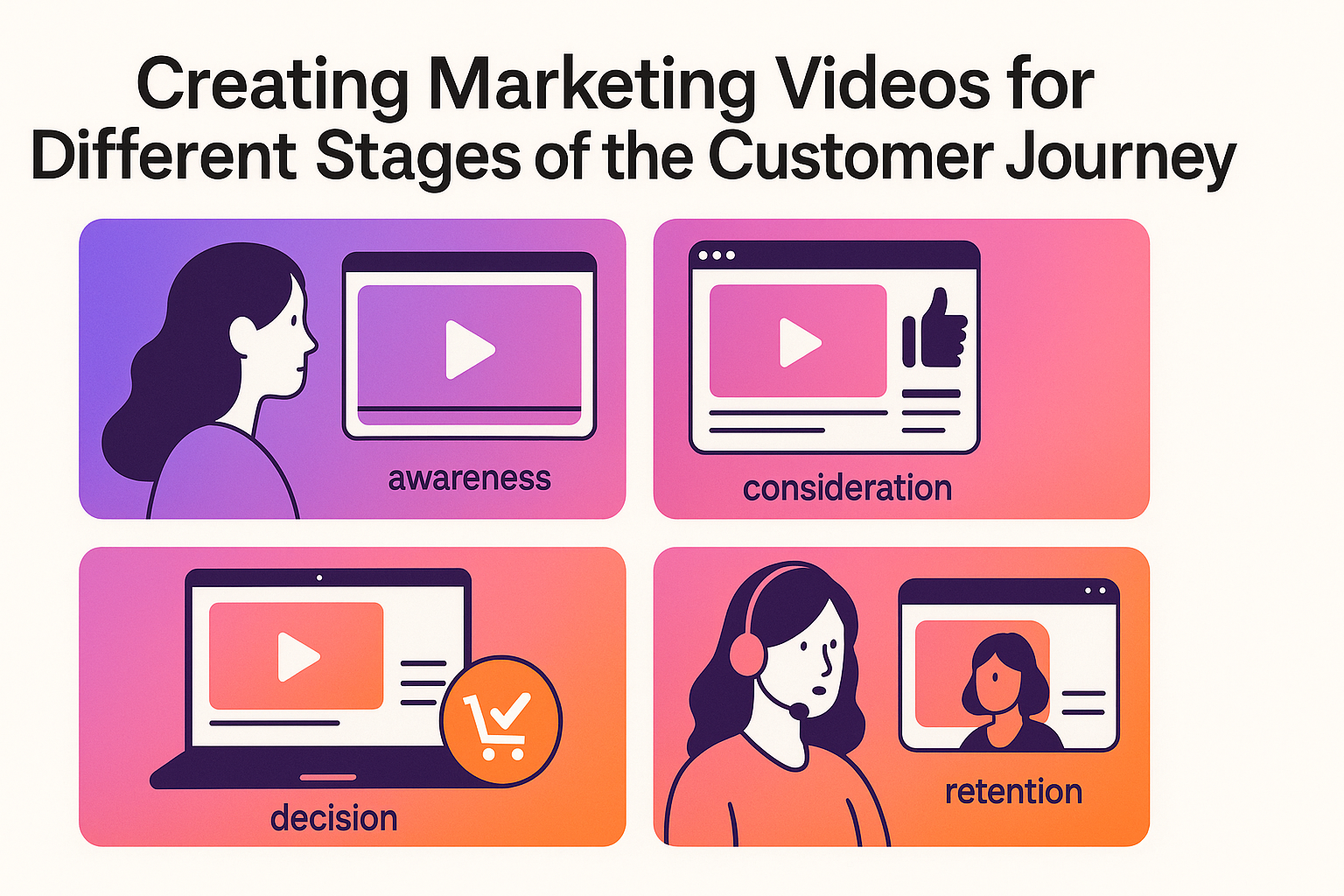
Think of your customer journey as three checkpoints. Each stage demands a distinct video type, message, and outcome:
| Stage | Goal | Video Type | Format/Length | Typical CTA |
|---|---|---|---|---|
| Awareness | Grab attention, introduce brand | Brand story, short hook ads, viral content | 6–30s | “Learn more”, “Follow”, “Watch next” |
| Consideration | Educate, build trust | Explainers, product demos, social proof | 30–90s | “See how it works”, “Download guide”, “Compare” |
| Decision | Drive purchase/action | Testimonials, case studies, offer videos | 30–60s | “Buy now”, “Book a demo”, “Start free trial” |
Each video should answer: “What does this viewer need to move one step closer to buying?”
Awareness Stage: Scroll-Stopping Hooks and Brand Stories
At the top of the funnel, you’re fighting for attention in a feed full of noise. This is where scroll-stopping hooks and cinematic storytelling matter. Six-second bumper ads and 15–30s brand teasers work here—think YouTube bumper ads or Instagram Reels. The goal: spark curiosity, not explain every feature.
AI-powered tools like Runway Gen-2 and Pika 1.0 now enable rapid creative iterations—meaning you can test 5–10 variations of a hook video in the time it once took to brief an agency. Typical production cost: ₹25,000–₹75,000 for a 30s social ad, delivered in 2–4 days instead of weeks.
For more on how to craft a powerful intro, see How Video Hooks Influence Viewer Attention in the First Few Seconds.
Consideration Stage: Explainers, Demos, and Social Proof
Now your audience knows who you are. The next battle: clarity and trust. This is where product explainer videos, animated “how it works” content, and customer testimonials shine. The average B2B SaaS explainer runs 60–90 seconds and costs $3,000–$12,000 depending on complexity and language. AI voice tools from ElevenLabs and multi-language dubbing (now ~1/10th the studio cost) make localisation trivial.
Here, the CTA should move the prospect closer to a decision—think “see a live demo” or “download the comparison sheet”. For practical frameworks, see The Complete Guide to AI Video Production.
For a deeper look at emotional storytelling’s role in explainer videos, read Why Emotional Storytelling Works in Marketing Videos.
Decision Stage: Testimonials, Case Studies, and Offer Videos
At this stage, your lead is comparing options or waiting for proof. Decision-stage videos deliver hard evidence: customer testimonials, quick case studies, or a direct offer (“Get 20% off if you buy today”). Industry data from HubSpot Research shows that 54% of buyers want to see proof points before purchase—video shortens this trust gap.
AI-powered editing and voice cloning mean you can produce multi-language testimonials or highlight reels at a fraction of the old cost. Expect $300–$800 per SKU for product video catalogues, or ₹25,000–₹75,000 for offer videos. Most clients see a 30–70% increase in landing page conversion when using targeted decision-stage videos.
Want to see how brands stretch one video into multiple formats for each stage? See How Brands Can Repurpose One Video Across Multiple Social Platforms.
Matching Message and Format: What Actually Works (with Examples)
It’s not just about the video type—it’s about matching message, length, and CTA to the stage. Here’s a breakdown of real-world examples that drive results:
| Stage | Example | Outcome |
|---|---|---|
| Awareness | 15s “Why We Exist” brand teaser for a D2C beverage | 2.3x boost in ad recall, CPM ₹6.2 vs ₹13.5 for generic ad |
| Consideration | 90s explainer for SaaS onboarding | +54% landing page sign-ups, 38% lower bounce rate |
| Decision | 30s testimonial montage with discount code | +31% checkout conversion, CPA drops from ₹1,200 to ₹800 |
Notice the pattern: shorter, curiosity-driven content at the top; longer, trust-building content in the middle; direct, proof-based videos at the bottom. For more on narrative structure, see The Role of Storytelling in Short-Form Social Media Videos.
How AI Production Changes the Game (But Doesn’t Replace Strategy)
AI tools—like OpenAI’s Sora for text-to-video, Google DeepMind’s video generation, and Runway’s Gen-2—have slashed production costs and timelines. You can now create 5 video variants for under $1,000 in a week, not a month. But here’s the catch: AI speeds up execution, not messaging. A bad script or the wrong CTA still kills performance.
Smart brands use AI to test and iterate—running A/B hooks, swapping backgrounds, or localising content for new markets. But the best results come from pairing AI with proven frameworks and human creative direction. For a full breakdown of AI video workflows, see The Complete Guide to AI Video Production.
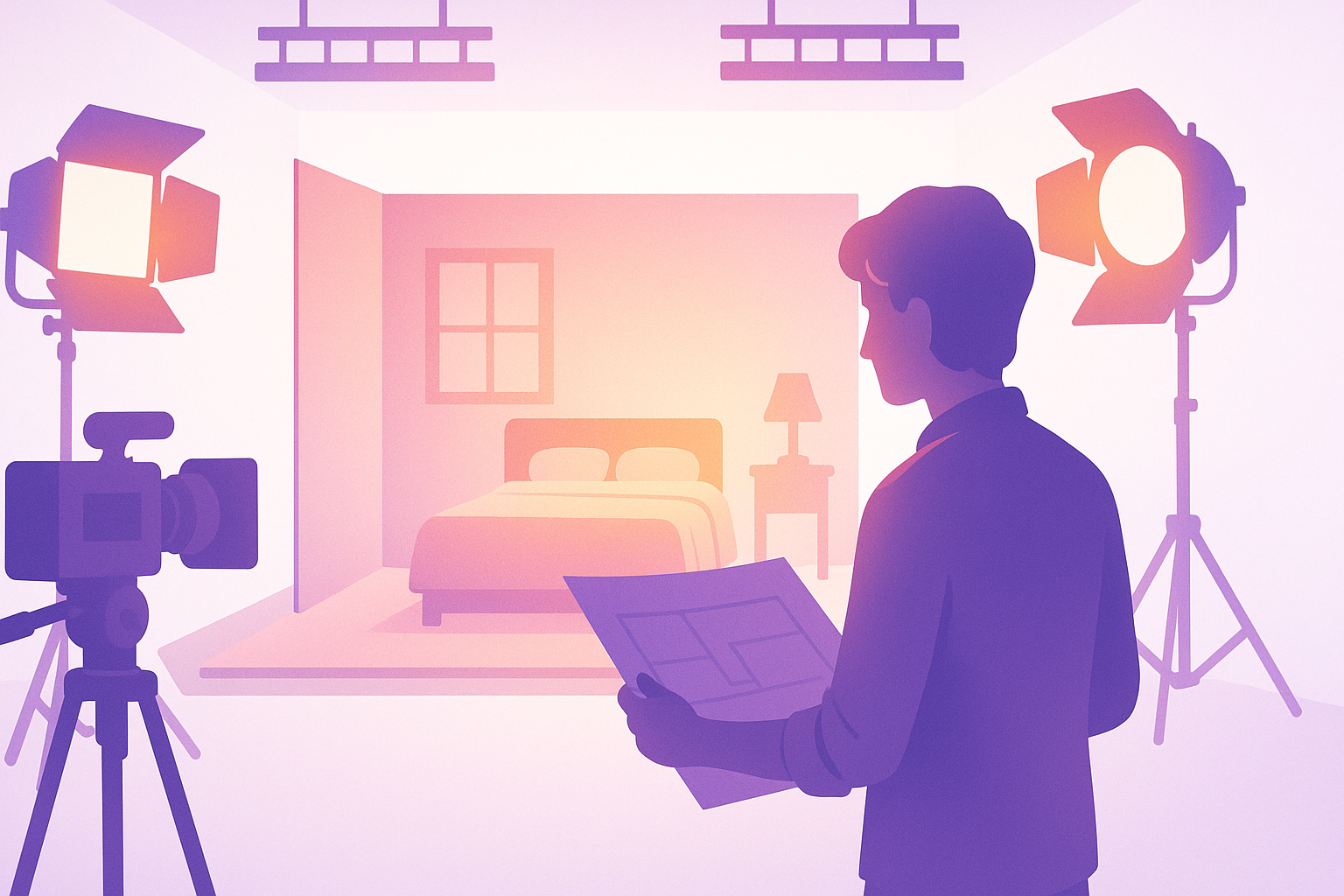
To see how cinematic lighting and set design play into high-converting videos, check out The Importance of Film Lighting in Professional Cinematography.
Drive Results with High-Converting Video Content
Stop guessing what videos work at each stage. Vidxen produces AI-powered marketing videos mapped to your customer journey—brand teasers, explainers, testimonials, and more. Get fixed pricing, creative direction, and measurable ROI.
Practical Workflow: Mapping Your Videos to the Funnel
Ready to build a video stack that moves leads from scroll to sale? Here’s the workflow top-performing brands use:
- Map your funnel: List your core touchpoints—ads, landing pages, onboarding, sales emails.
- Assign video types: Awareness = hook/brand teaser; Consideration = explainer/demo; Decision = testimonial/offer.
- Define a single objective per video: Don’t blend “awareness” and “decision” in one clip.
- Script for the stage: Open with the viewer’s pain or aspiration, not your product features.
- Test and iterate: Use AI to create and A/B test multiple variants. Double down on what converts.
For a service that handles the entire workflow—from script to final cut—see Marketing Videos.
Common Pitfalls: Where Most Brands Get It Wrong
Most video campaigns underperform for three reasons:
- Misaligned CTA: Asking for a purchase in a first-touch awareness ad.
- Wrong format: 90s explainer as a pre-roll ad—guaranteed skip.
- Generic scripting: “We’re the best!” with no proof, story, or emotional hook.
Industry leaders avoid these by using data-driven frameworks—see Gartner’s video marketing best practices. If your bounce rate is high or conversions are flat, your video is likely mismatched to the journey stage.
What ROI Looks Like: Numbers from the Field
What’s the actual upside of matching marketing videos to the customer journey? Industry estimates suggest:
| Metric | Generic Video | Journey-Matched Video |
|---|---|---|
| Ad Recall | +12% | +35% |
| Conversion Rate | 1.2–2.8% | 2.5–6.5% |
| Landing Page Bounce | 59% | 37% |
| Cost per Acquisition | ₹1,600 | ₹800–₹950 |
Sources: HubSpot Research, Statista, Gartner.
If you want to optimise your video funnel for maximum ROI, explore Vidxen’s Marketing Videos service.
FAQ — Marketing Videos for Customer Journey Stages
What types of marketing videos work best at each customer journey stage?
For awareness, use short brand teasers or hook ads. In consideration, focus on explainers, product demos, or animated how-tos. At the decision stage, testimonials, case studies, and direct offer videos drive action. Each should have a stage-appropriate CTA and run the optimal length for its platform—6–30s for awareness, 30–90s for consideration, 30–60s for decision.
How do I know if my video content matches the customer journey?
If your video’s CTA asks for too much too soon, or if viewers drop off early, your content is likely mismatched. Map each video to a single funnel stage and objective. Use analytics (view duration, conversion rate, bounce) to validate. Split-testing different formats is also effective for finding the right fit.
How much should I budget for journey-matched marketing videos?
Typical costs range from ₹25,000–₹75,000 for a 30s social ad, $3,000–$12,000 for a 60–90s explainer, and $300–$800 per SKU for product catalogue videos. AI-powered workflows can deliver 2–4× faster and at 50–70% lower cost than traditional studios, especially when producing multiple variants for testing.
Can AI-generated videos replace traditional production for all stages?
AI tools like Runway and Sora can speed up production, localise content, and scale creative variations. However, they don’t replace strategy, scripting, or creative direction. The most effective brands use AI for speed and iteration, but human insight for messaging and storytelling—especially for brand-defining content.
How do I repurpose one video for multiple journey stages?
Start with a core video (like a brand story or explainer), then edit shorter hooks for awareness, add overlays for offers, or splice in testimonials for the decision stage. AI-driven editing makes this process faster and cheaper. For a practical guide, see How Brands Can Repurpose One Video Across Multiple Social Platforms.
What’s the risk of not tailoring videos to each stage?
You risk poor engagement, low recall, and wasted spend. For example, decision-stage videos shown to cold leads often get skipped, while generic awareness videos don’t convert ready buyers. Data shows that matching content to journey stage can double conversion rates and halve cost per acquisition.
How quickly can I launch a full-funnel video campaign?
With AI-powered production, you can launch awareness, consideration, and decision-stage videos within 7–14 days, including script, creative, and revisions. Traditional agencies often take 4–6 weeks. Fast iteration lets you test and optimise in real time for better results.
Where can I get help producing journey-matched videos?
Vidxen offers end-to-end marketing video production mapped to your funnel—strategy, scripting, AI-powered production, and post. See our Marketing Videos service for details and a fixed-price quote in 24 hours.