
If you think the director just yells “Action!”, you’re missing the 90% of work that happens before and after. From script rewrites to the last colour grade tweak, the role of a film director shapes every frame, performance, and emotion—often under brutal timelines and tight budgets.
TL;DR
- Directors drive every creative, technical, and emotional choice from script to final cut.
- Modern workflows blend hands-on direction with AI tools for faster, cost-efficient production.
- Key director tasks: script shaping, casting, shot design, actor direction, edit approvals, and final mastering.
- AI-powered pipelines can cut post timelines by 40–60% without sacrificing director-led vision.
Script Development: Where the Director’s Influence Begins
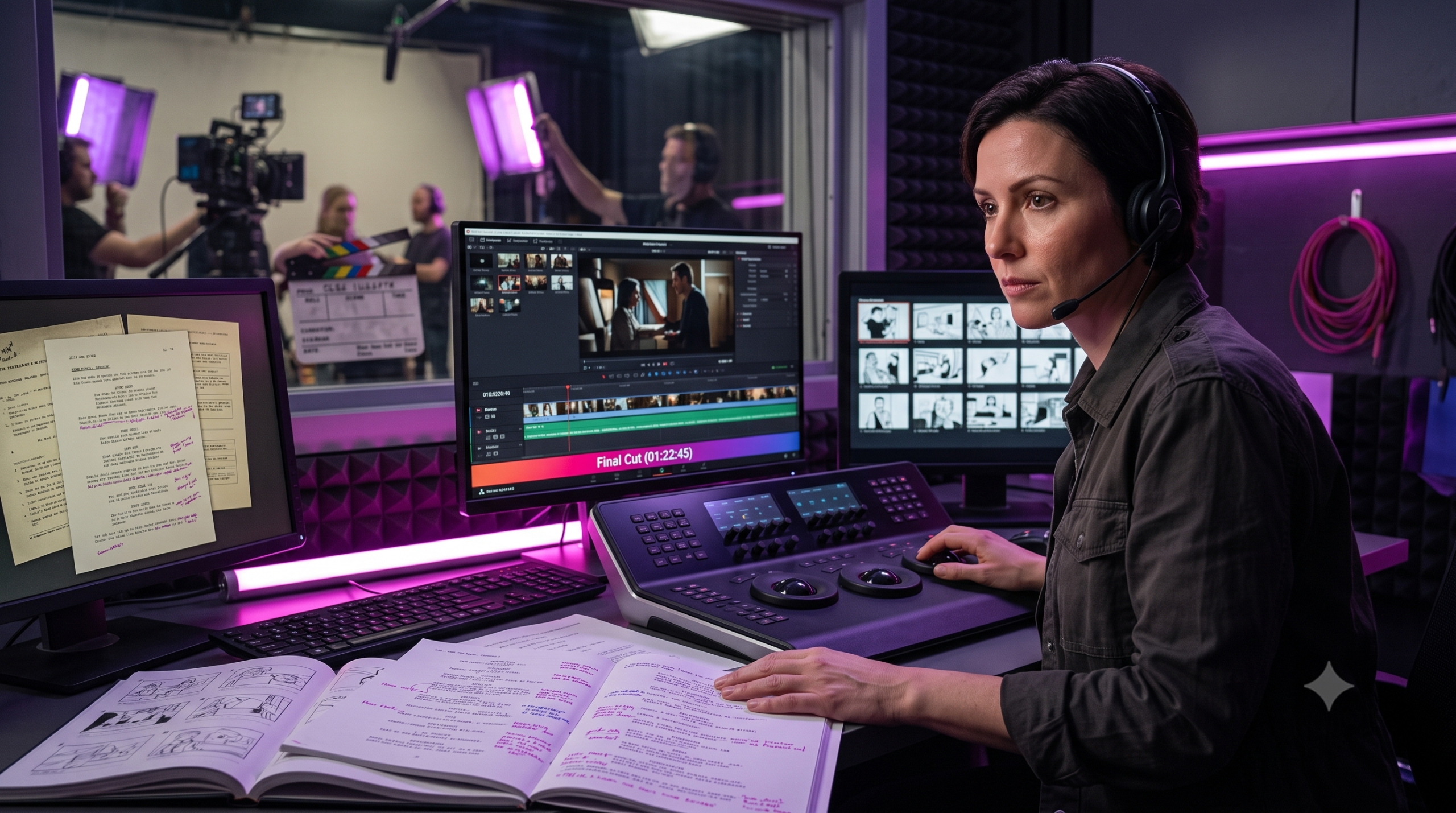
Forget the old idea that the director just turns up on set. The real work often starts months earlier, in script meetings and storyboarding sessions. Directors collaborate with writers to shape not just dialogue, but pacing, tone, and visual subtext. On a typical feature, a director may request 3–7 rounds of script revisions before pre-production even begins.
Tools like DeepMind’s Genie or OpenAI’s GPT-4o are already accelerating script iterations, but the director’s taste still defines every creative decision. AI can suggest, but it can’t choose the heartbeat of a scene.
Pre-Production: Visualising and Planning Every Frame
Pre-production is where the director’s vision becomes a concrete plan. This phase covers casting, location scouting, and the shot list. Directors work closely with the DoP (Director of Photography), production designers, and storyboard artists to nail down the film’s look and feel. For a 100-minute feature, this can involve 1,000+ storyboard frames and dozens of camera setups.
AI-driven tools like Runway’s Gen-2 or Pika 1.0 now assist in pre-visualisation, enabling directors to test lighting, camera movement, or even audition digital backgrounds before a single set is built. This means fewer on-set surprises and up to 30% reduction in pre-production timelines according to McKinsey research.
Casting and Working with Actors: Crafting Performance
The chemistry between director and actor is the engine of every memorable performance. Directors handle auditions, callbacks, and chemistry reads, then spend weeks (or sometimes just days, on indie budgets) in rehearsal. On set, the director’s feedback shapes every gesture and inflection, balancing the script’s intent with spontaneous magic from the cast.
Directors also set the emotional tone—think of Greta Gerwig’s meticulous rehearsal process for “Little Women” or S.S. Rajamouli’s hands-on approach on “RRR.” No AI tool replaces this human dynamic, though digital casting and virtual rehearsals are expanding options for international co-productions.
Production: Orchestrating the Shoot
When cameras roll, the director is everywhere—blocking actors, reviewing takes, collaborating with the cinematographer, and making split-second decisions under pressure. On a standard 30-day shoot, a director will call “cut” on hundreds of takes, always tracking continuity, tempo, and emotional arc.
AI now assists with on-set playback, continuity tracking, and even live VFX previews. For instance, Adobe Sensei can flag lighting mismatches in real time. Still, the director’s real power is in uniting a 50+ person crew behind a single vision—no algorithm can do that.
Post-Production: Shaping the Final Story
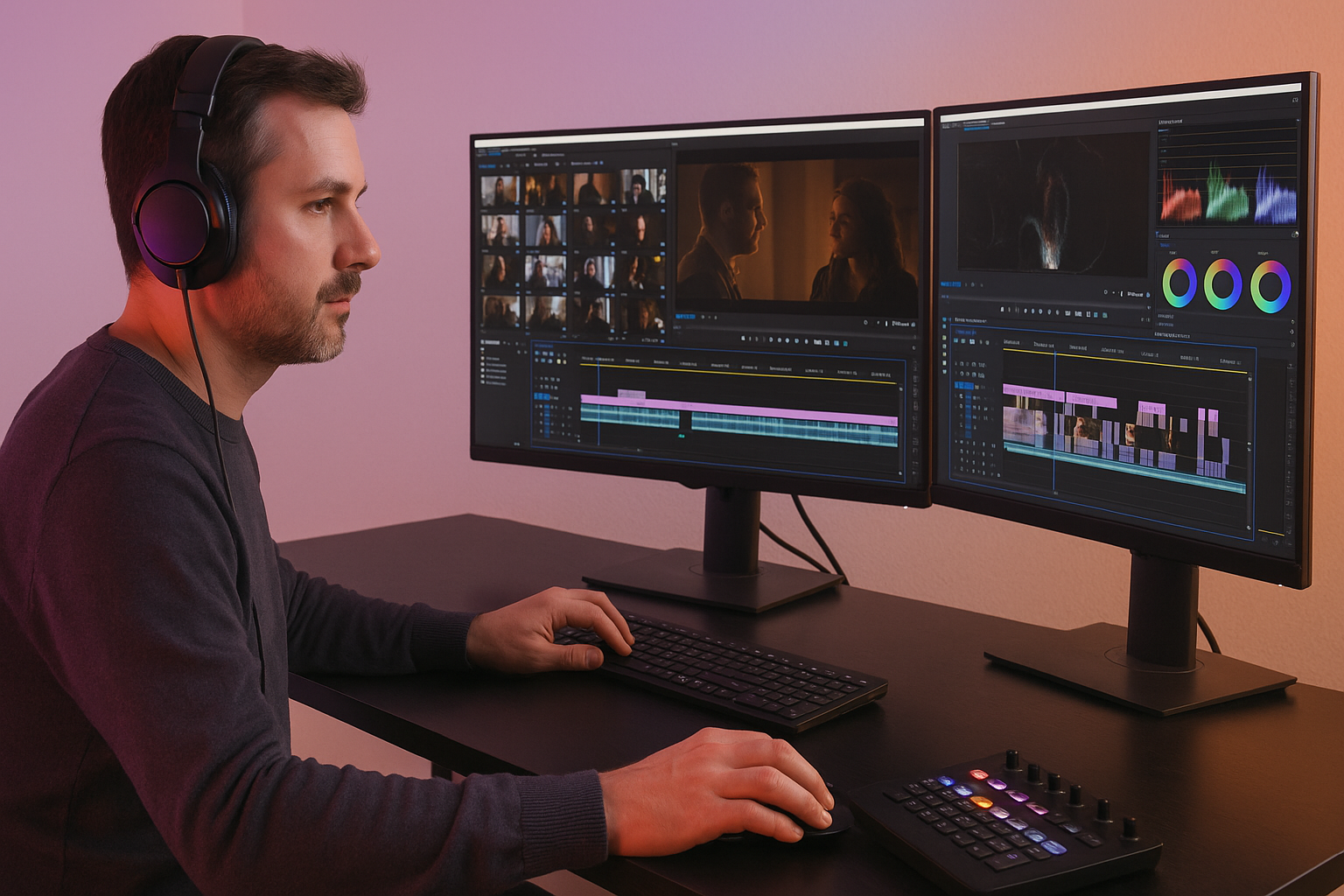
Directors are deeply involved in the edit—selecting takes, shaping the rhythm, and working with editors, sound designers, and colourists. A typical post-production schedule for a feature film is 3–6 months, but AI-powered tools are compressing this to as little as 6–8 weeks for indie projects.
Platforms like ElevenLabs (for voice correction and dubbing) and Runway Gen-2 (for background replacement) let directors iterate faster. But the director’s eye is still the final filter—AI can offer, but only a human can say “that’s the take.”
For a detailed breakdown of each filmmaking phase, see our guide Pre-Production vs Production vs Post-Production: Understanding the Filmmaking Process.
Director’s Decisions: Impact on Budget, Timeline, and Quality
A director’s choices ripple across the entire production. Script rewrites can save weeks in post. Efficient shot planning trims location days and reduces overtime costs. In one Vidxen project, director-led AI workflows shaved ₹1.8 crore (approx. $215K) off the VFX budget while delivering Hollywood-level quality—proof that creative leadership and smart tech aren’t opposites.
| Director Task | Impact | AI/Tech Leverage |
|---|---|---|
| Script Rewriting | Reduces edits, clarifies vision | GPT-4o, DeepMind Genie |
| Shot Listing | Optimises schedule, saves ₹₹₹ | AI pre-vis, Runway Gen-2 |
| On-Set Direction | Boosts crew efficiency | Live AI continuity tools |
| Post Supervision | Faster, cheaper edit cycles | Runway, ElevenLabs, Adobe Sensei |
For more on how cinematography and direction interplay, see How Cinematography Shapes the Visual Identity of a Film.
Ready to Direct Your Vision from Script to Screen?
Get blockbuster-quality sequences, AI-enhanced VFX, and end-to-end production support—without the Hollywood price tag. Our producers work directly with directors at every stage, from script to final cut.
AI’s Place: Augmenting, Not Replacing, the Director
AI can accelerate the process, but it can’t replace a director’s instincts or taste. Generative tools help visualise worlds and automate tedious post work, but the human eye still makes the final call. As OpenAI’s Sora shows, synthetic footage is getting photoreal—but it’s directors who turn pixels into stories audiences remember.
Even the best AI pipeline needs a creative lead; otherwise, you end up with soulless content that nobody wants to watch. The future isn’t “AI vs. director”—it’s “director, now with superpowers.”
From Final Cut to Release: The Director’s Last Word
The director is usually the last person to sign off before a film goes to colour grading, mastering, and distribution. They approve the final cut, review the sound mix, and often oversee marketing trailers or festival submissions. For OTT or theatrical releases, directors work with platform QC teams to ensure the film meets technical specs—4K upscaling, surround sound, subtitle accuracy.
End-to-end movie production services, like Vidxen’s Movie Production, now offer directors AI-powered tools for versioning, last-minute edits, and mastering—so you can focus on storytelling, not technical firefighting.
For more on how showrunners and directors collaborate in series, see The Role of a Showrunner in Modern TV Series Production.
The Role of a Film Director: Not Just “Action!”
Summing up: the director is the creative nucleus of any film, orchestrating every phase from script tweaks to the final export. The job is part-artist, part-manager, and part-technologist. Today’s directors leverage AI to reduce costs and compress timelines, but their vision remains irreplaceable. If you want a film that moves audiences (and investors), invest in a director-led pipeline—technology is only as powerful as the hands guiding it.
For a complete overview of modern AI-powered production, see our pillar post AI Video Production: The Complete Guide.
FAQ — The Role of a Film Director in Modern Filmmaking
What does a film director actually do on set?
A film director orchestrates all creative and technical decisions on set. This includes directing actors, managing the crew, overseeing camera angles and lighting, and ensuring every shot aligns with the story and vision established during pre-production. The director is the final authority on performance, pacing, and visual style during the shoot.
How early does a director get involved in a film project?
Directors often join during the script development phase, months or even years before shooting begins. They influence story structure, character arcs, and visual tone from the outset, collaborating with writers and producers to shape the film’s foundation before pre-production starts.
Can AI tools replace a director’s creative role?
No—AI can speed up script writing, visualisation, and even post-production, but it cannot replicate a director’s creative judgement or emotional intuition. The director’s taste and leadership are still essential for achieving emotionally resonant, audience-ready films.
How does a director impact production costs and timelines?
Director-led planning—especially in script, shot listing, and post supervision—can reduce location days, overtime, and costly reshoots. When paired with modern AI workflows, directors can compress timelines by 40–60% and save substantial VFX and editing costs compared to traditional pipelines.
What’s the director’s role in post-production?
Directors review and approve each edit, select the best takes, guide sound and music choices, and supervise colour grading and VFX. The director ensures the final cut matches their vision before the film is mastered for distribution on OTT, theatrical, or festival platforms.
How are AI tools changing the director’s workflow?
AI tools now accelerate script iterations, automate pre-visualisation, assist with on-set continuity, and streamline editing and VFX. Directors can review more options, make faster decisions, and focus on creative leadership—without being bogged down by manual technical tasks.
What’s the difference between a director and a showrunner?
In film, the director is the creative lead. In TV, a showrunner oversees the entire series—managing scripts, episode directors, and continuity. Directors execute the vision on individual episodes, but the showrunner ensures overall narrative and stylistic coherence across the series.
Where can I get end-to-end support for director-led movie production?
Services like Vidxen’s Movie Production offer end-to-end support—from script and storyboarding to AI-powered VFX, editing, and mastering. Producers and directors collaborate throughout, ensuring the final film matches the creative vision while optimising cost and time.